This client runs guided food tours in a major Canadian city: walking tours, market tours, corporate events and gift cards. Their website already had plenty of blogs. That wasn’t the problem.
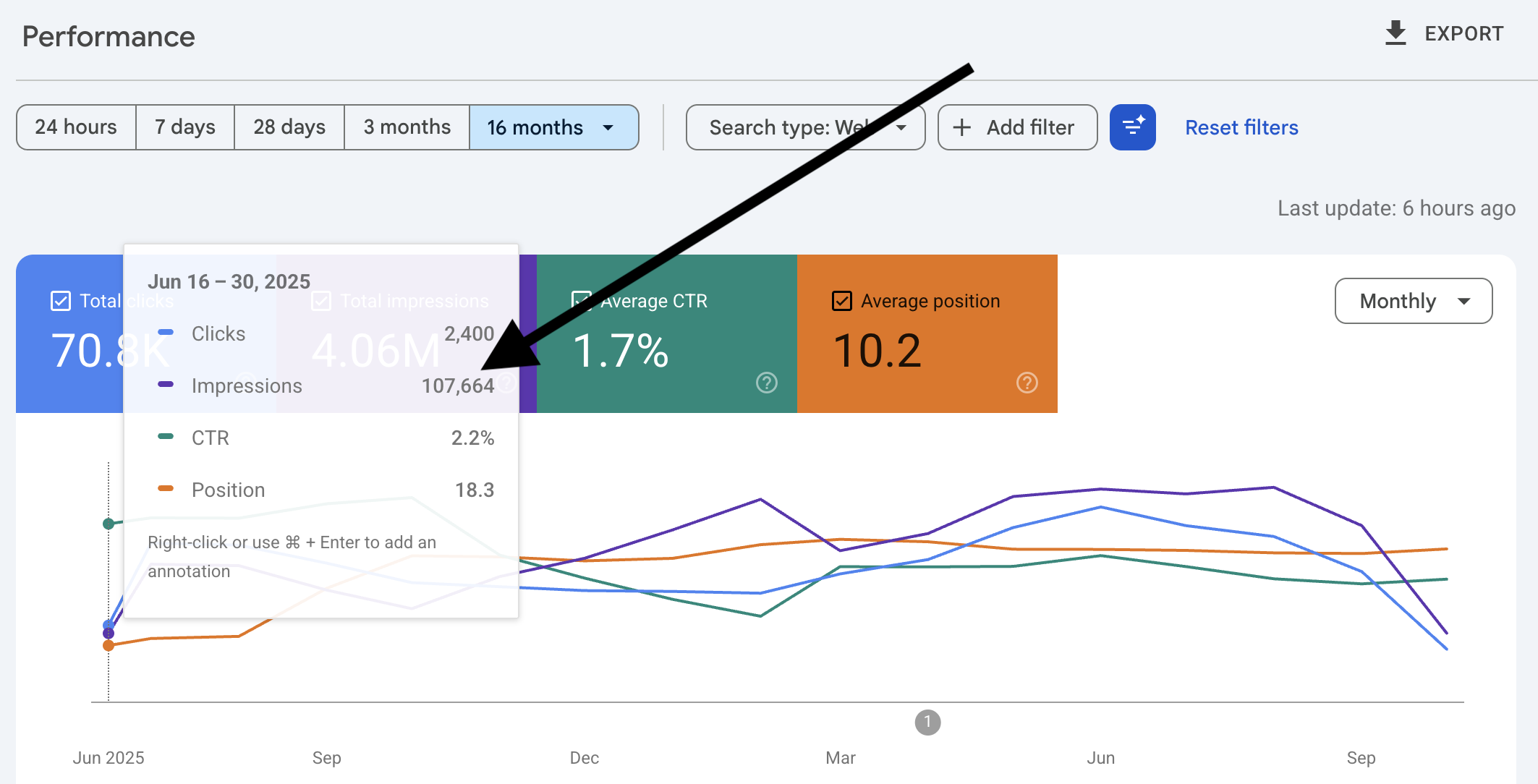
The problem was that none of it had a goal. There was no keyword research, no target search for each page and no plan for what each blog should do. Pages competed with each other, thin posts sat beside strong ones, and nothing linked together. The site averaged position 18.3 on Google, the middle of page two, where almost nobody clicks.
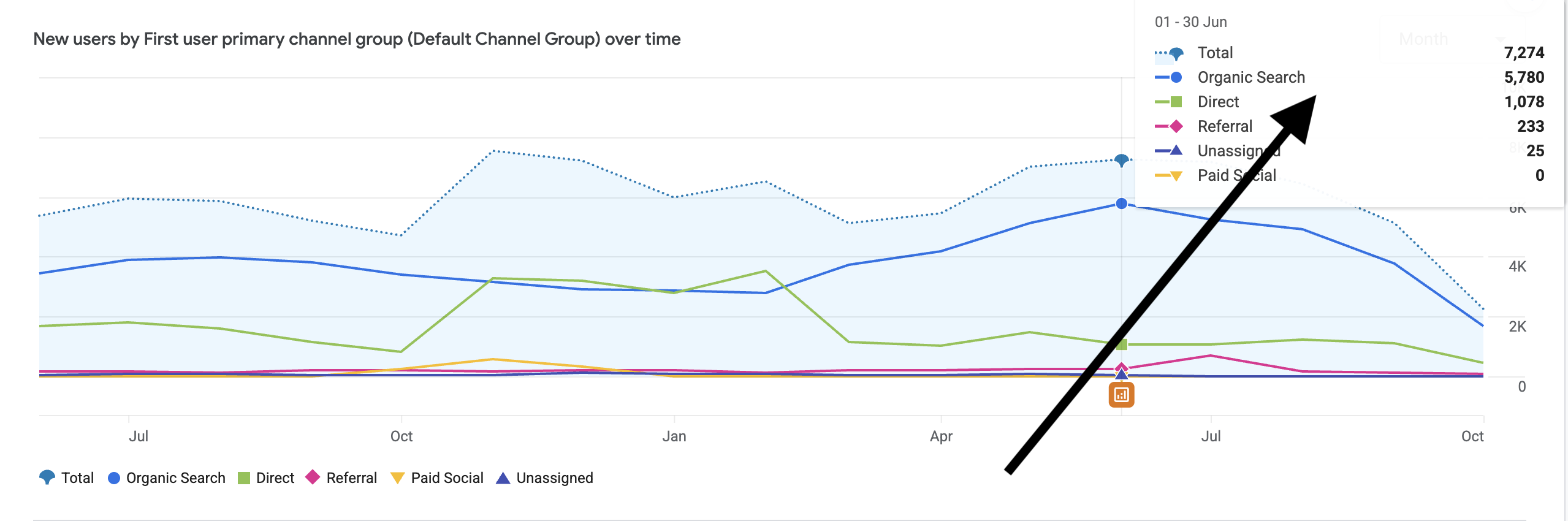
Twelve months later, organic new users are up 67% year over year and the average position is 8.7. Organic search now brings in almost four out of five new visitors.
Most tour operators think they need more blogs. This site proved the opposite. It already had plenty of content, and Google still did not know which page to show for which search.
Travel and tourism is a research-heavy industry. People read a lot before they book. They search for where to eat, what to do, which neighbourhood to stay in and what to see on a rainy day. A tour company that answers those questions well gets found long before a traveller decides on a tour. But only if every page has a clear job.
So before we wrote anything new, we fixed what was already there.
The biggest group of searches bringing people in is not “food tour” anything. It is travellers planning where to eat: neighbourhood restaurants, dim sum, desserts, fish and chips, food trucks and market guides. Those are exactly the pages we consolidated and optimized.
Food tour searches are smaller, but they are the ones that book. Corporate and gift searches are smaller again, but they are worth the most per booking. The internal linking is what connects the first group to the other two.
Before we started, the blogs were islands. We connected them:
That way Google understands which page is the authority for each topic, and the trust that blogs earn flows to the pages that take bookings.
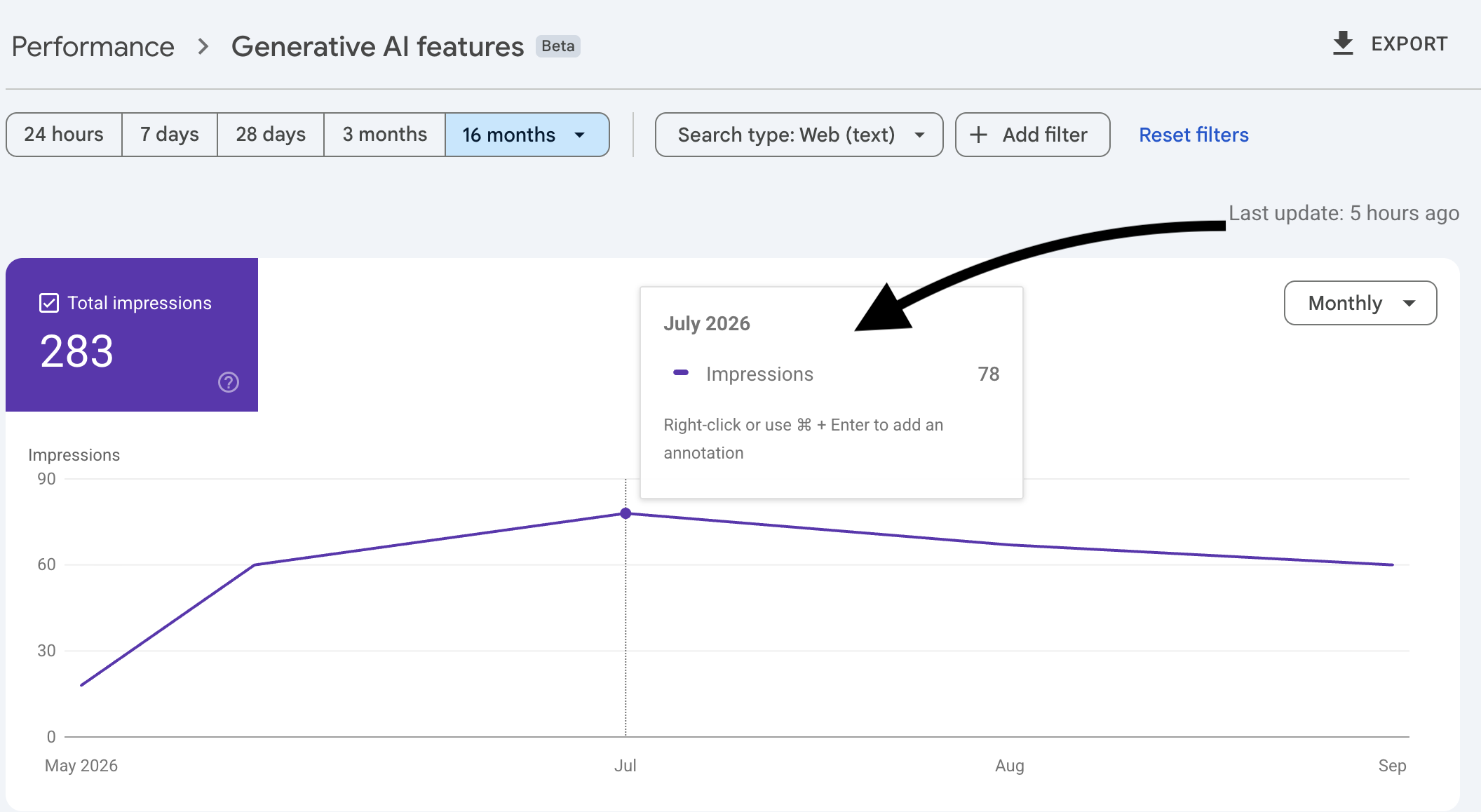
Average position went from 18.3 to 8.7. Over 16 months the site earned 70.8K clicks from 4.06M impressions.
The site averaged about 7,200 impressions a day in late June 2025 and about 11,100 a day in June 2026.
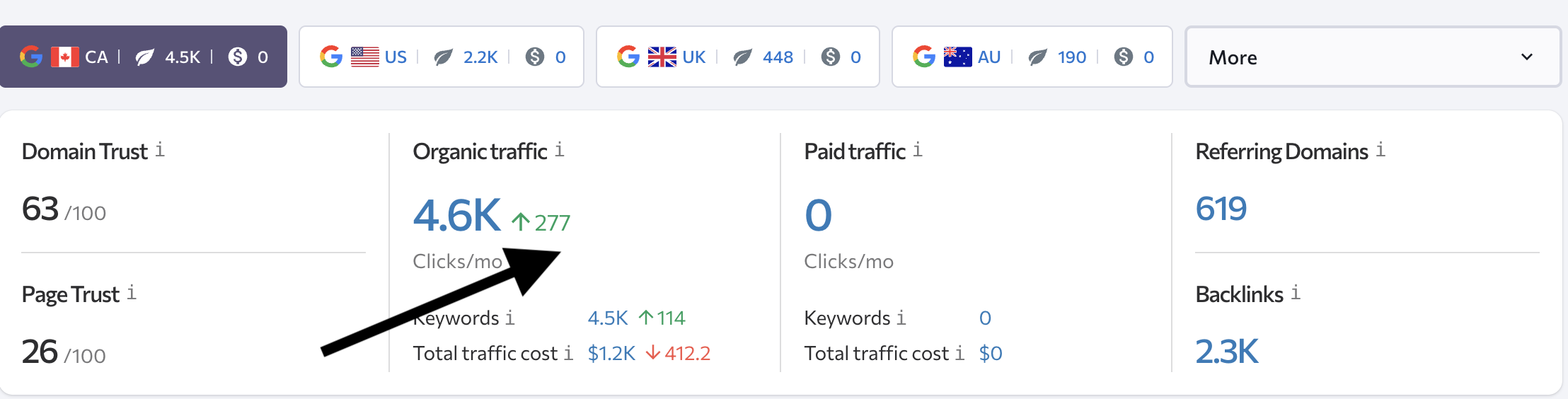
SE Ranking tracks the site for 4.5K keywords in Canada, 2.2K in the US, 448 in the UK and 190 in Australia. Estimated organic traffic in Canada alone is worth about $1.2K a month in ad spend.
| GA4, new users | June 2025 | June 2026 | Change |
|---|---|---|---|
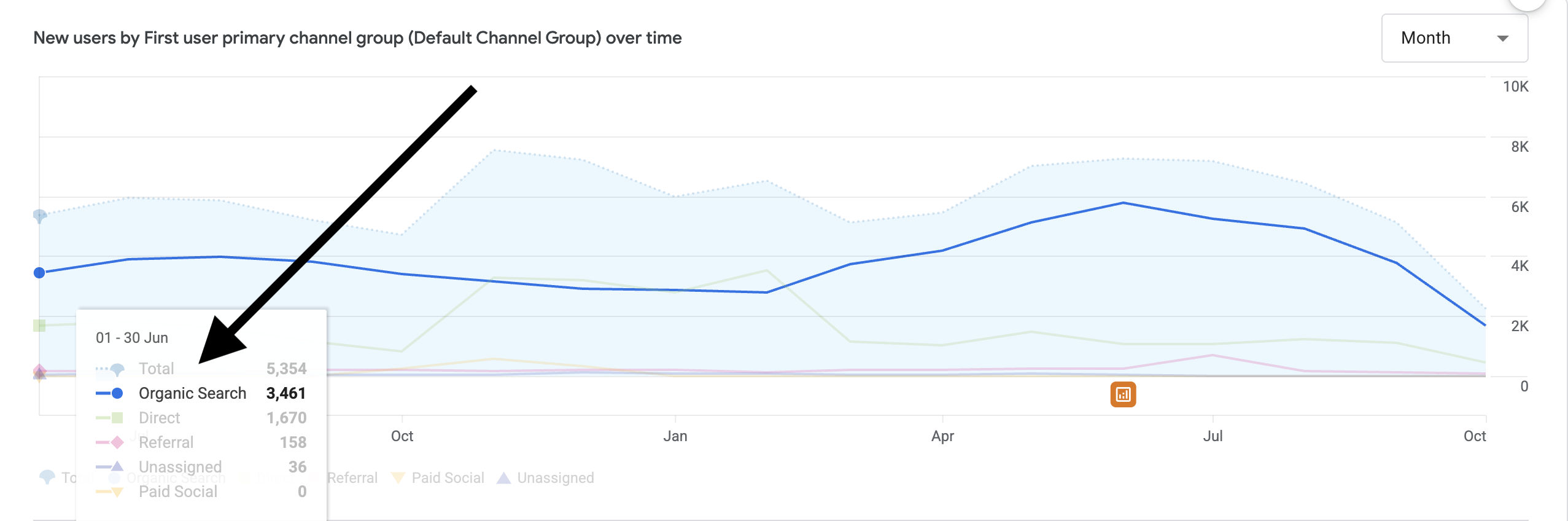
| Organic search | 3,461 | 5,780 | +67% |
| All channels | 5,354 | 7,274 | +36% |
| Organic share | 64.6% | 79.5% | +14.9 pts |
Lots of good content, but no structure and a messy link profile. Here are the three steps that turned it into a strategy.
First we cleaned up the spammy third party referring domains that had built up over the years. A cleaner profile means Google trusts the links that are left, and it removes risk before we push harder.
Then came full keyword research. We grouped every relevant search into topic clusters like dim sum, seafood, food trucks and team building. Each page got its own keywords. One page, one job. That stopped the cannibalization.
This was the biggest part of the work. We went through the blog library page by page, updating titles, headings and copy to match each page’s keywords. That is what good SEO content services should look like.
We started by going through Google Search Console and GA4 in detail. We looked at which pages were getting impressions but no clicks, which pages were competing for the same searches, and where visitors were actually coming from.
The region data changed the plan. The site was showing up in Canada, the US, the UK and Australia. A big share of readers were international visitors planning a trip, not locals. That told us the content had to be written for someone who has never been to the city before.
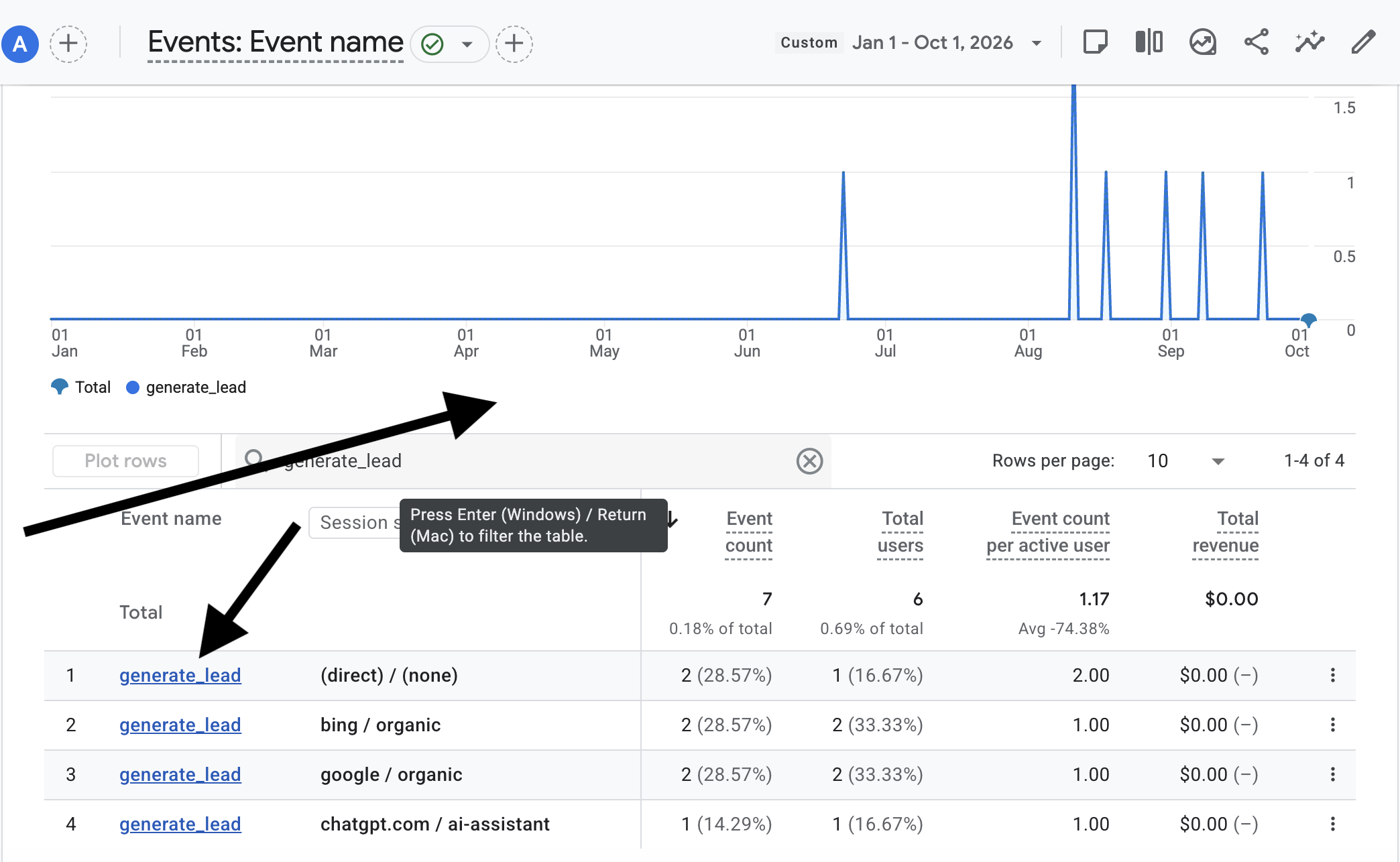
Only after all of that did we start writing new content. Keyword research showed whole topics the site had never covered, even though visitors from all over the world were searching for them before their trip. We filled those gaps one by one, with each new page assigned to its own cluster and its own keywords from day one.
While we were rewriting, we also optimized every page for AI Overviews, ChatGPT and other AI search tools. Travellers increasingly ask AI tools “where should I eat in…” or “what is the best food tour in…”, and those tools pull from content that is easy to quote.
Where two or three blogs targeted the same search, we picked one winner and redirected the rest to it.
Two or three short, overlapping posts became one strong, complete guide.
Every page now answers the question behind the search, with clear H2s and H3s that match how people phrase it.
Each page now earns the click, not just the impression.
Compressed files, descriptive names and alt text, so pages load faster and show up in image search.
Every guide is now accurate for the current season.
More content is not the answer. Better content is. This site did not need hundreds of new blogs. It needed every existing page to have one clear job, fewer and stronger pages instead of many thin ones, and links that tell Google how everything fits together.
What comes next:
Got a website full of blogs that are not bringing in bookings? Send it to me. I will show you which pages are competing with each other, what to merge and where the gaps are. No cost, no pressure.
If your site already has content, you can usually see rankings move within three to six months once that content is cleaned up and targeted. Tourism is seasonal, so give it one full season to compare.
It is when two or more of your pages target the same search. Google cannot tell which one to rank, so often neither ranks well. Merging them into one strong page usually fixes it.
It means optimizing your content so AI tools like ChatGPT and Google’s AI Overviews can quote it. Travellers use these tools to plan trips, so yes, it matters more for tourism than for most industries.
Quality matters more than quantity. Cleaning up spammy links and building strong internal links often moves a site further than chasing new backlinks.
Access to Google Search Console and GA4, a list of your tours and which matter most, and your busiest and quietest months.
Usually it is one of three things: no keyword target per page, several pages competing for the same search, or no internal links. More content will not fix any of those.
Not blindly. Some should be merged into a stronger page and redirected, some should be updated and some are fine as they are. Each one needs to be checked against search data first.
Yes. Direct bookings skip the commission, and ranking for planning searches puts you in front of travellers before they open a booking platform.
It depends on how much content you have and how much needs consolidating or rewriting. I will give you a clear number after the free review.
“We truly value Jyoti’s transparency and communication. She shares detailed updates and walks us through the strategy so we always know what’s happening behind the scenes. It’s reassuring to work with someone both knowledgeable and approachable.”
“Working with Jyoti has been an amazing experience. She clearly outlined the entire process, and the thoroughness and support have been incredible. It’s made everything feel structured and seamless.”
“Jyoti has been proactive with updates and detailed reports outlining the work done each month. We appreciate the transparency and the keyword research shared with us. It’s helped us understand the strategy and ongoing SEO efforts.”
“Working with Jyoti on our website was a seamless experience. She took the time to understand our vision and delivered a clean, user-friendly site that reflects our brand perfectly.”