
When this moving company came to us, their website had five pages: Home, About Us, Services, Contact, and not much else. There were no service pages and no location pages. Nothing on the site answered what a person planning a move is actually searching for.
They move people all over: around Vancouver Island, from the Island to the Lower Mainland, from BC to Alberta and Ontario, and now across the border into the US. Their website described none of that.
There were no Google Ads and no paid social. Every lead in this case study came from SEO and AI search.
Most case studies open with the win. This one opens with how little there was to work with, because that is the part that makes the result mean anything.
Nobody types “movers” into a search engine. They search for “Nanaimo to Vancouver movers”, “Comox to Kelowna moving cost”, or “how long does a move from BC to Alberta take.” Every one of those searches is a person with a date, a starting point, an end point and a budget.
A homepage can’t rank for all of those, and a single Services page can’t either. Each route and each type of move needs its own page that answers that person’s questions. So that’s what we built.
We did keyword research on every route the company runs and compared its competitors on each one. Island to Mainland routes like Campbell River to Vancouver and Nanaimo to Vancouver had the highest search volume, so we built those first. Then we added interprovincial routes such as BC to Alberta and BC to Toronto. Next were in-province long-distance routes like Comox to Kelowna.
Every service got its own page: local moving, long-distance moving, apartment moves by size, large furniture, office moves, student moves, senior moves, moving and storage, moving boxes, and clean-outs. When they launched estate clean-outs as a new service, it got a page on day one.
Each page covers what a mover needs to know before picking up the phone: how much it costs, how long it takes, how the process works, and what to expect on moving day. We added FAQ sections built from real search questions. Those FAQs are a big part of why these pages now show up in AI Overviews.
We set up internal linking so route pages, service pages and city pages support each other. We built backlinks, got the business listed in the relevant directories, and fully optimized the Google Business Profile. We also structured the pages to be easy for Google’s AI Overviews and other AI answer engines to pull from.
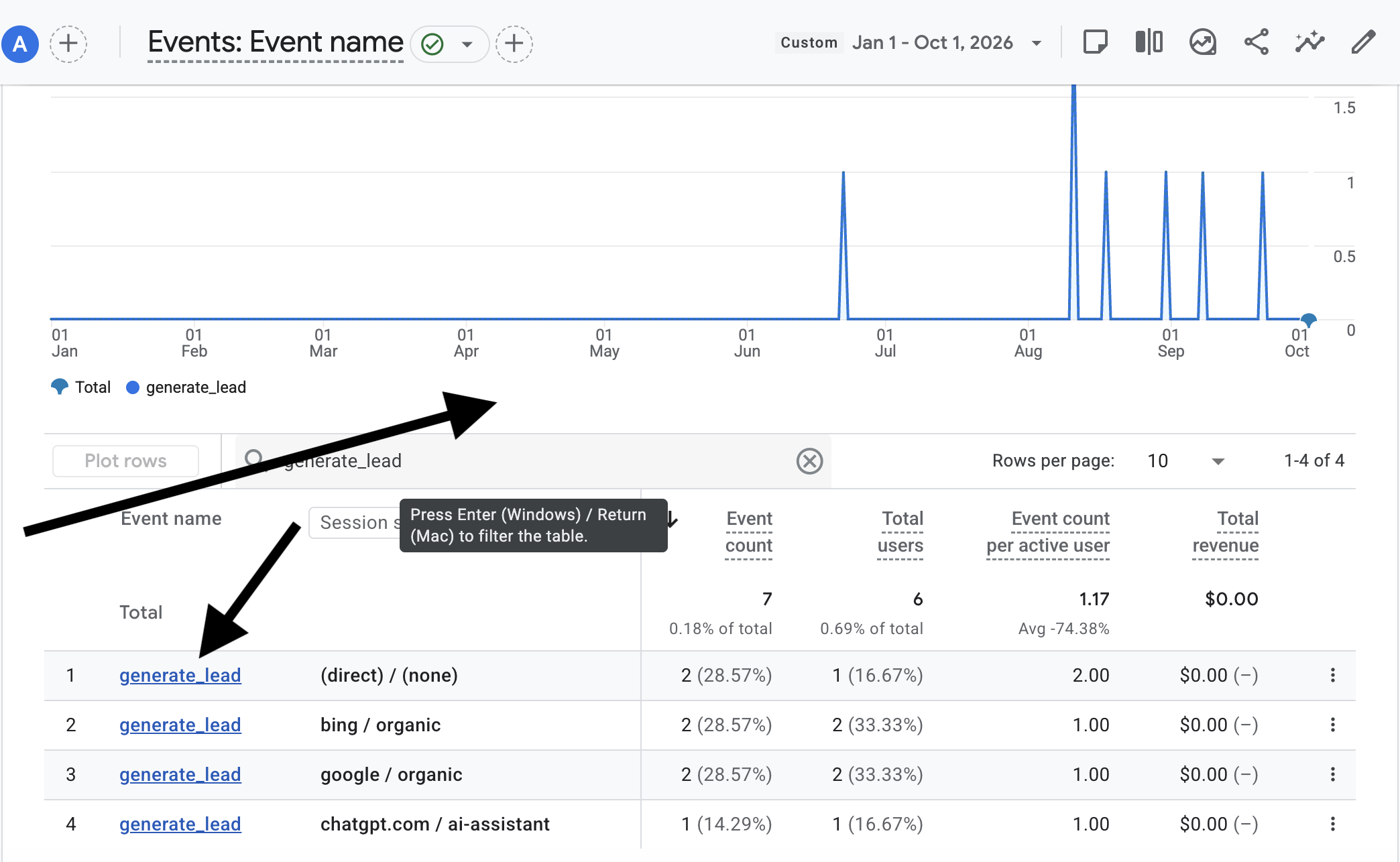
Here is everything, including what happened when the SEO stopped. Anyone can screenshot the good graph. The useful thing for you, if you run a moving company, is seeing which numbers move first and which ones lag.
Around April–May 2026, things were going well and the client decided to pause the service. That’s a reasonable call for a business owner. Here’s what followed.
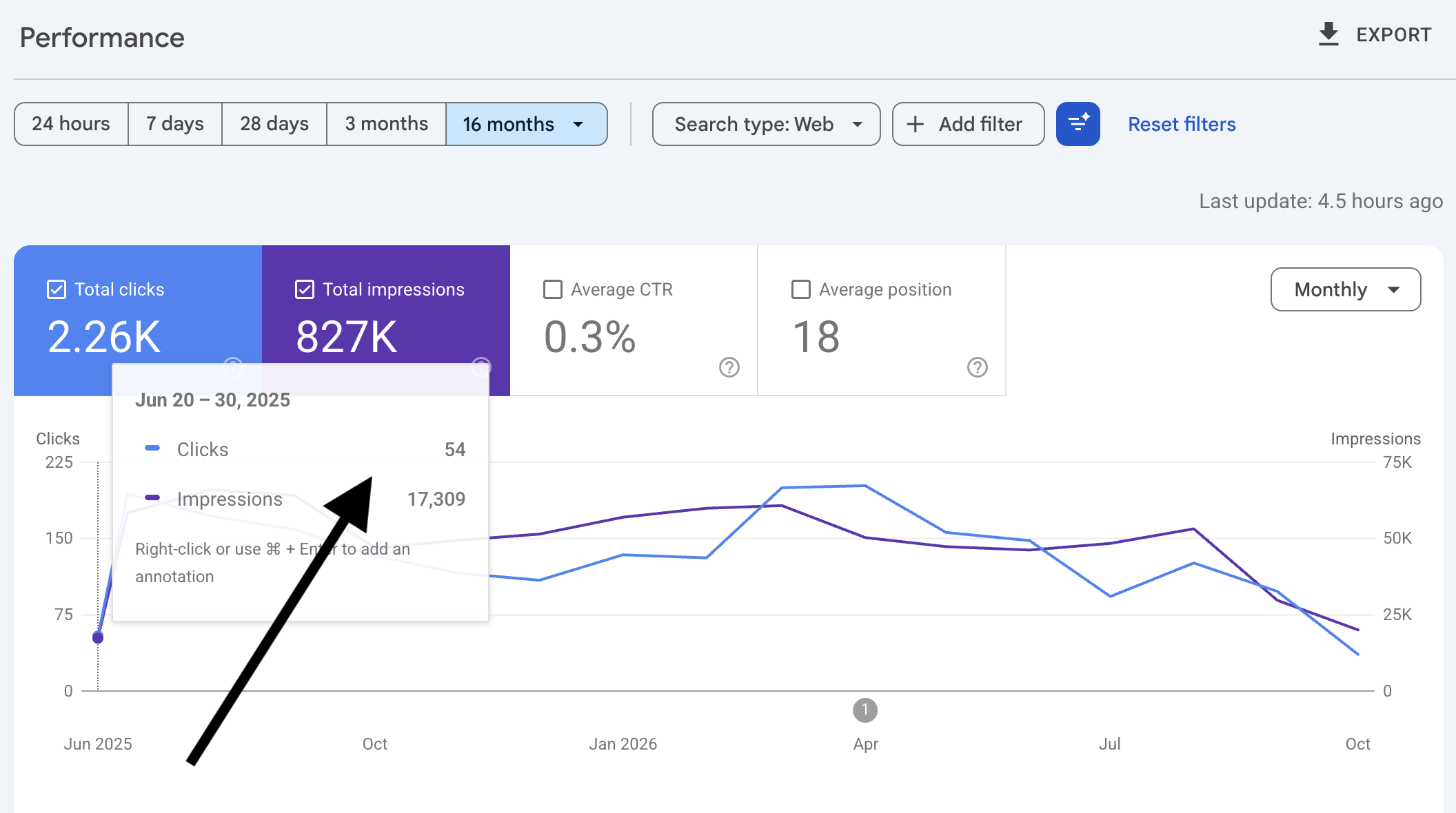
Search impressions and clicks drifted down over the summer. By September 2026, clicks were down to 98 and impressions to 29,752, roughly half the March peak. AI search took longer to react, but once it did, it fell hard: from 1,902 impressions in August to around 800 in September and under 500 in October.
Clicks from people who didn’t already know the company went from about 51 a month to 200 at the March 2026 peak, with 60,805 impressions that month. The site now ranks for competitive, high-volume terms like “moving companies [city]”, “moving and storage [city]”, “moving boxes”, and long-distance moving searches across Vancouver, the Lower Mainland and the Island.
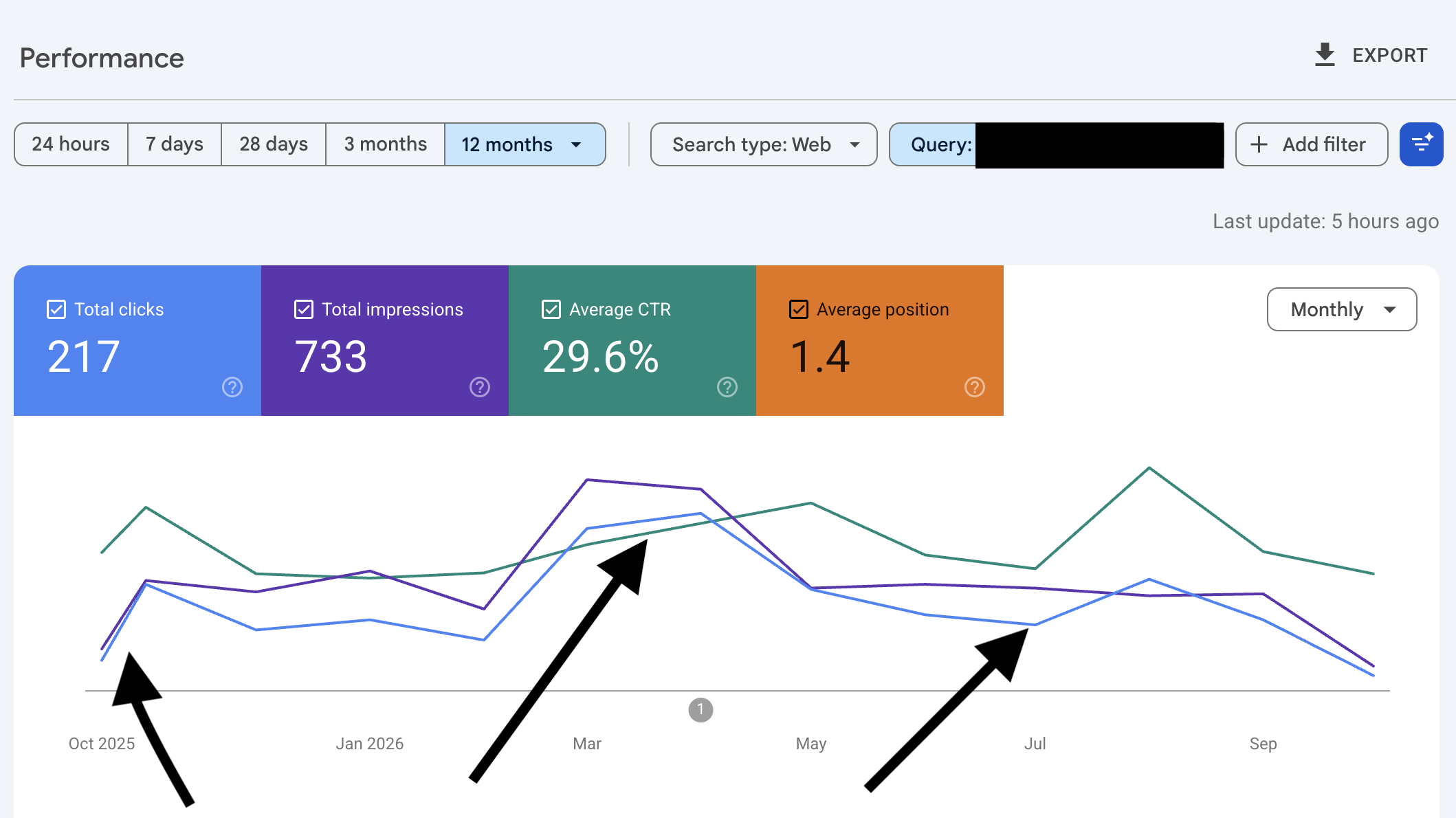
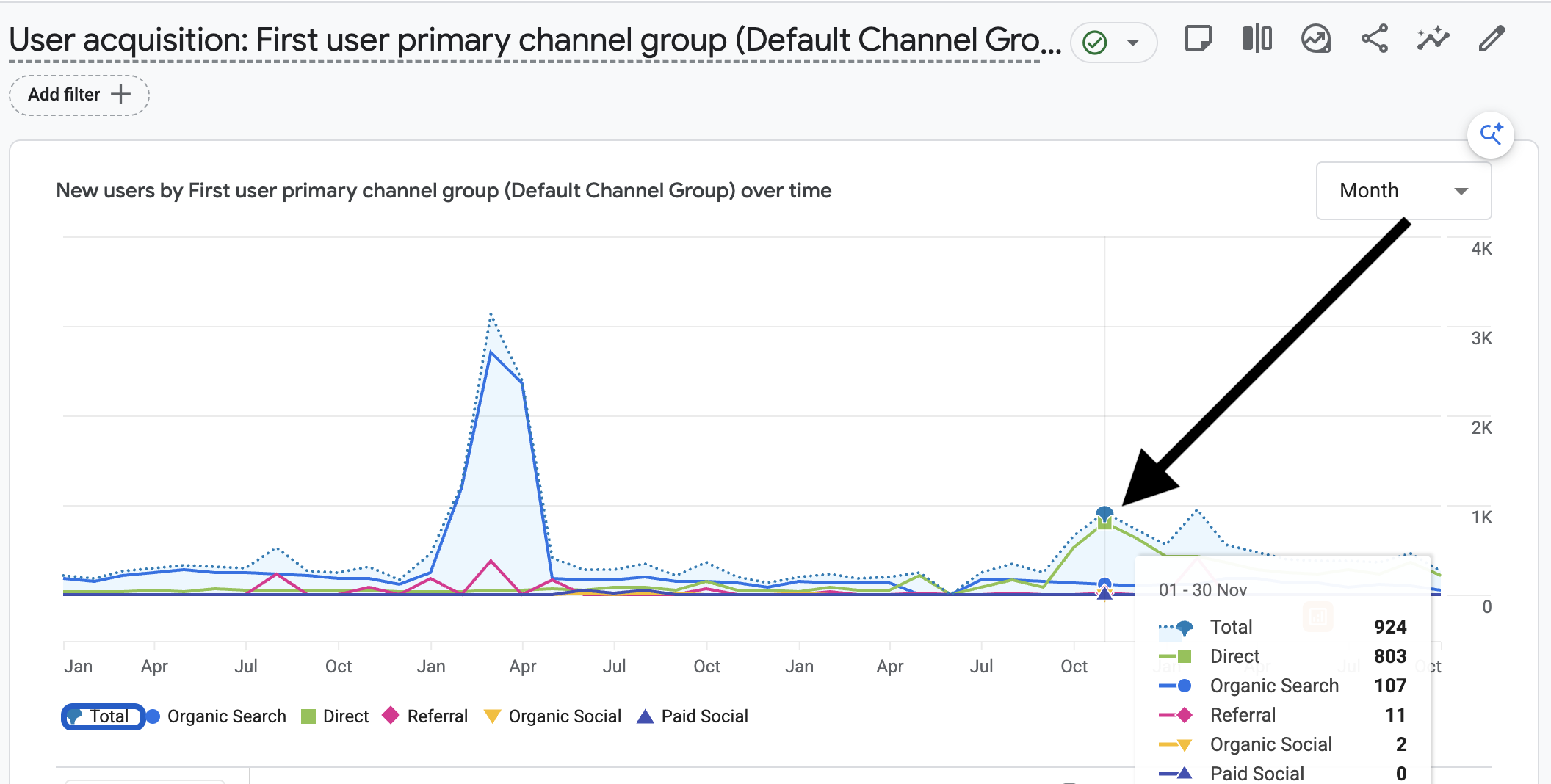
Branded searches went from 6 clicks and 22 impressions a month to 32 clicks and 111 impressions. Over 12 months, the brand name drew 217 clicks at a 29.6% CTR and an average position of 1.4. More people were searching for the company by name, and that shows up in direct traffic too: in one month, 803 of 924 new users arrived direct. People found the company through search or AI, remembered the name, and came back.
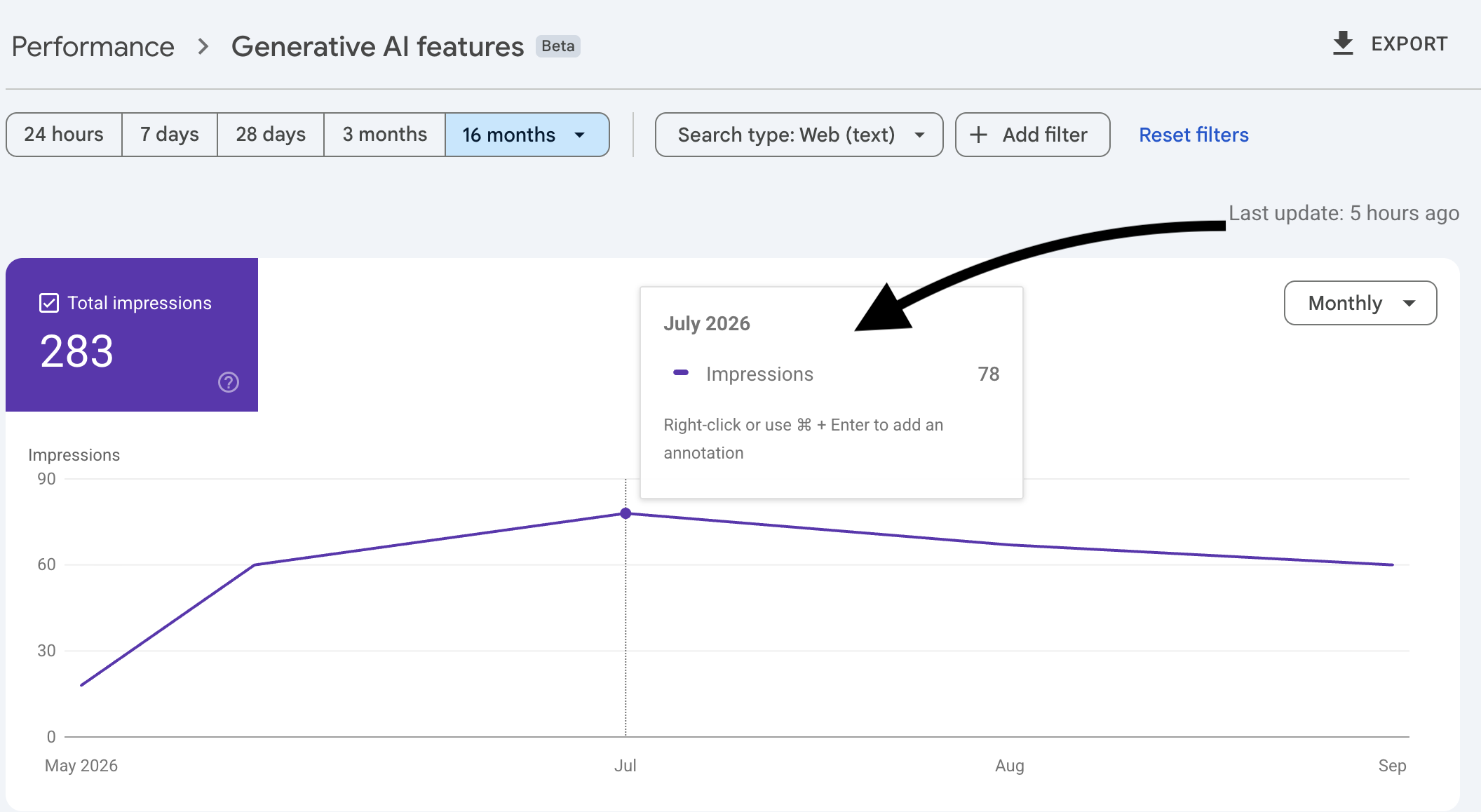
The Generative AI features report shows 7.4K impressions over 12 months. It held at around 1,800–1,900 a month from June to August 2026 and peaked at 1,902 in August. The FAQ-heavy, question-led pages are doing the work here.
The website went from almost no leads to 15–20 a month, all from SEO and GEO. Not every one becomes a booked move, and some don’t fit the job type or location. But every one of them came in without a dollar spent on ads.
SEO for moving companies is not a one-time project. Building the route pages, service pages and FAQs is what took this company from near zero to 15–20 leads a month. But competitors keep publishing, Google keeps changing, and AI answers lean toward sites that stay fresh. When the work stops, the results start to slide, slowly at first and then fast.
The pages built the momentum. Consistent work is what keeps it.
See how a similar approach worked in our cleaning company SEO case study.
Send us your site. Our team will show you which routes and services you’re missing, what your competitors rank for, and where the quick wins are.
Expect early movement in 2–3 months and real lead flow in 6–12 months. In this case, clicks and impressions grew steadily from June 2025 and peaked in March 2026.
Build pages for the routes people actually search for. We started with the highest-volume routes, like Island to Mainland, and expanded from there. Pages for routes with no search demand are wasted effort.
Yes, but not thousands of them. Relevant directory listings, local citations and a few quality links, combined with strong internal linking, did the job here.
This case study shows it. After the pause, clicks dropped by about half within a few months and AI impressions fell by more than 70%. Rankings don’t disappear overnight, but they do slip.
These are usually the highest-value jobs, and the people booking them research heavily before they call. A detailed route page answering their questions puts you in front of them early.
Enough to cover every route you run and every service you offer. A five-page site can’t rank for “Nanaimo to Vancouver movers” and “office moving Victoria” at the same time. Each one needs its own page.
Ads stop the day you stop paying. This client never ran ads, and SEO alone brought in 15–20 leads a month. Ads can work alongside SEO, but they aren’t a substitute for it.
A lot, especially for “movers near me” and city searches. A fully optimized profile with the right categories, service areas, photos and reviews supports everything your website does.
Yes. This site reached 1,902 AI search impressions in a single month. Clear answers to real questions about cost, timing and process are what get a site cited.
A list of your services, the routes and areas you cover, access to your website, Search Console, Analytics and Google Business Profile, and an hour to walk us through how your business works
“We truly value Jyoti’s transparency and communication. She shares detailed updates and walks us through the strategy so we always know what’s happening behind the scenes. It’s reassuring to work with someone both knowledgeable and approachable.”
“Working with Jyoti has been an amazing experience. She clearly outlined the entire process, and the thoroughness and support have been incredible. It’s made everything feel structured and seamless.”
“Jyoti has been proactive with updates and detailed reports outlining the work done each month. We appreciate the transparency and the keyword research shared with us. It’s helped us understand the strategy and ongoing SEO efforts.”
“Working with Jyoti on our website was a seamless experience. She took the time to understand our vision and delivered a clean, user-friendly site that reflects our brand perfectly.”