In January, a dental clinic came to me with a brand new website and nothing behind it. No Search Console. No Google Analytics. Plenty of blog posts, but no structure tying them together. Ten months later, the site gets more than 100 clicks a month from Google, over 7,500 monthly impressions, and it shows up in Google’s AI answers. Patients have started finding the clinic, and getting in touch, through search. Here is how we got there.
This was a healthcare website starting close to zero. The site was new, and nobody had ever measured how it performed in search.
The first job was not SEO at all. It was setting up the basics: Google Search Console so we could see which searches the site appeared for, and GA4 so we could see what visitors did once they arrived. Without those two, every decision is a guess.
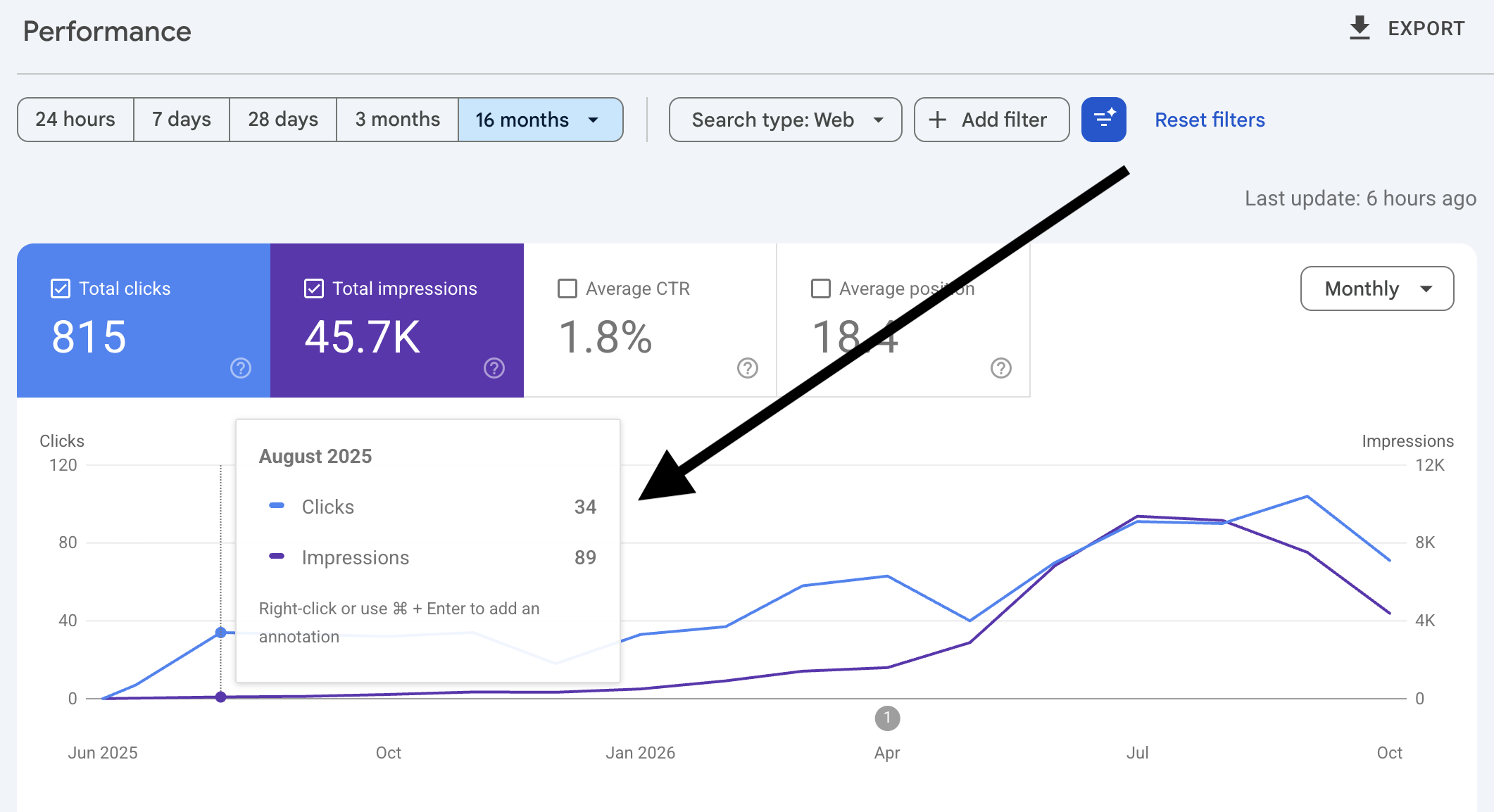
Once the data started coming in, the picture was clear. The site was getting around 30 clicks and roughly 100 impressions a month from Google. The clinic had been publishing blogs regularly, which is more than most practices do, but the posts had no plan behind them. Topics overlapped, several pages competed for the same searches, and none of them pointed readers toward booking an appointment.
Dentistry is local. A patient looking for a dentist is not comparing clinics across the country. They want someone they can get to easily, usually close to home or work. That means a clinic is not competing with every dental website in Canada, only with the practices nearby. Most of those practices have the same problem this one had: a nice website, a few service pages, and nothing that answers the questions patients actually type into Google. A clinic that answers those questions properly, for the area it really serves, can outrank much bigger practices without a huge budget.
There was no shortcut here. It was steady work, done in the right order. Here is how I took the clinic from scattered content to a clear plan.
Before adding a single new post, I went through every blog on the site. Posts covering the same topic were merged, weak ones were improved, and each one was mapped to a clear search intent. Every blog was then linked to the service page it supports, so readers had an obvious next step and Google could see how the site fits together.
I did the keyword research for each treatment the clinic offers and gave every core service its own properly optimized page. Titles, descriptions and headings were rewritten around the words patients use, not clinical jargon, and each page answers the questions someone has before they book.
I looked at where the clinic’s patients come from and how far people realistically travel for a dentist. That set the target area. Instead of chasing a whole city, the pages and local signals were focused on the neighbourhoods the clinic can genuinely serve. This is the core of local SEO for dentists, and it is where many clinics waste effort.
This is where the biggest difference came from. I researched specific, low-competition questions people search for, the kind a busy dentist would never think to write about. Think of a new parent searching when their baby should first see a dentist, or whether a white spot on a toddler’s tooth is something to worry about. For each topic, I briefed the clinic on the pain points to cover, what the reader is anxious about, and what they need to hear before booking. The clinic wrote the posts from their own experience.
H2: Four reports, and the honest version of each
These are the reports I check every month for this clinic, and what each one shows after ten months.
We did run Google Ads for the clinic as well. But healthcare is one of the most restricted categories in paid search. Google limits how health-related ads can target people, and dental advertising in Canada comes with its own rules about what a clinic can say. That makes PPC harder to scale and more expensive per patient. So while ads played a supporting role, most of the effort went into SEO, where results build on each other instead of stopping the day the budget does.
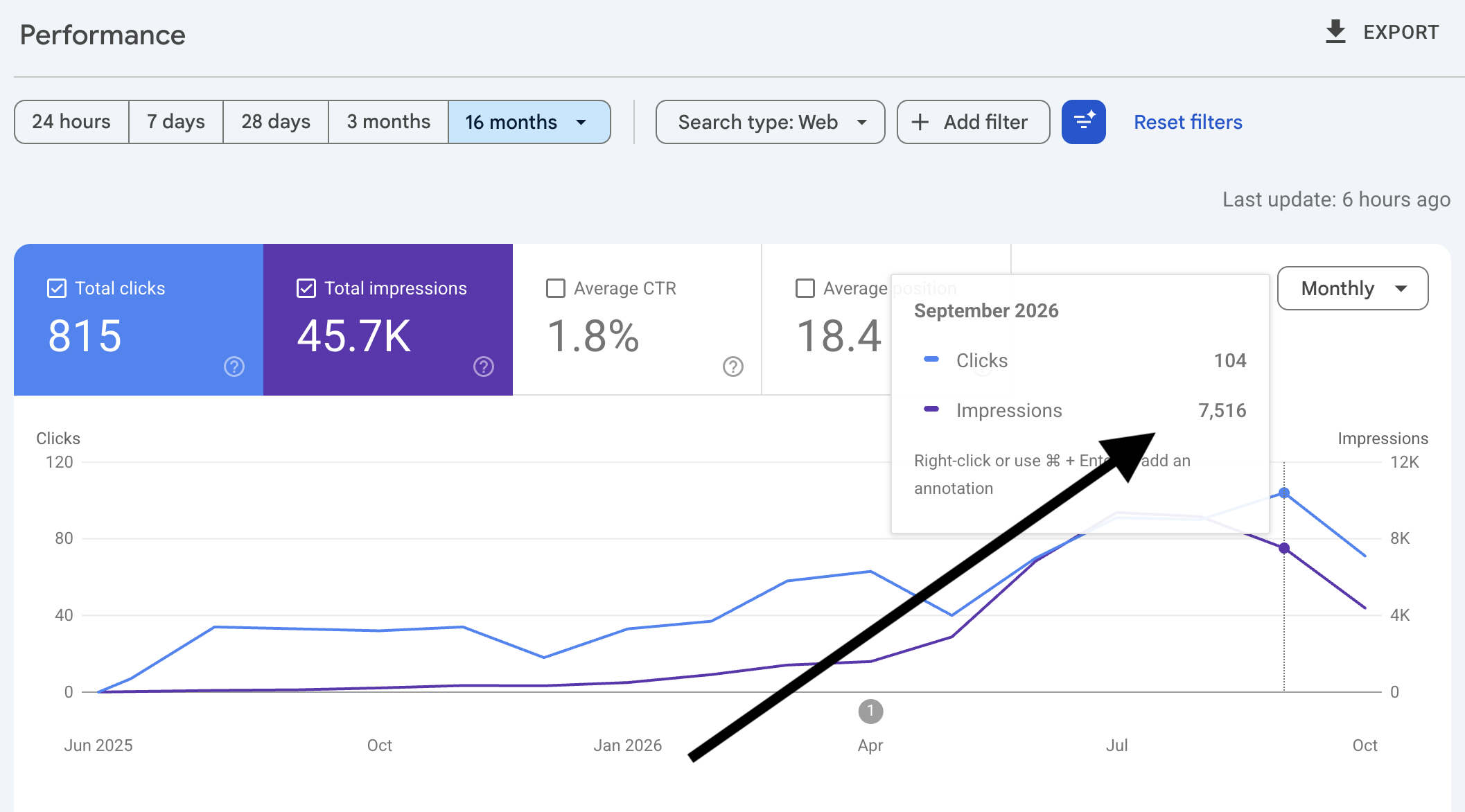
In September 2026, the site earned 104 clicks from Google, roughly three times where it started. Search Console shows 815 clicks over the last 16 months, and more than half of them came in the past six months as the work started to compound.
Impressions grew much faster than clicks. The site went from barely registering to 7,516 impressions in September, after peaking above 9,000 in July. The clinic now shows up for far more searches than before, including many where it is not on page one yet.
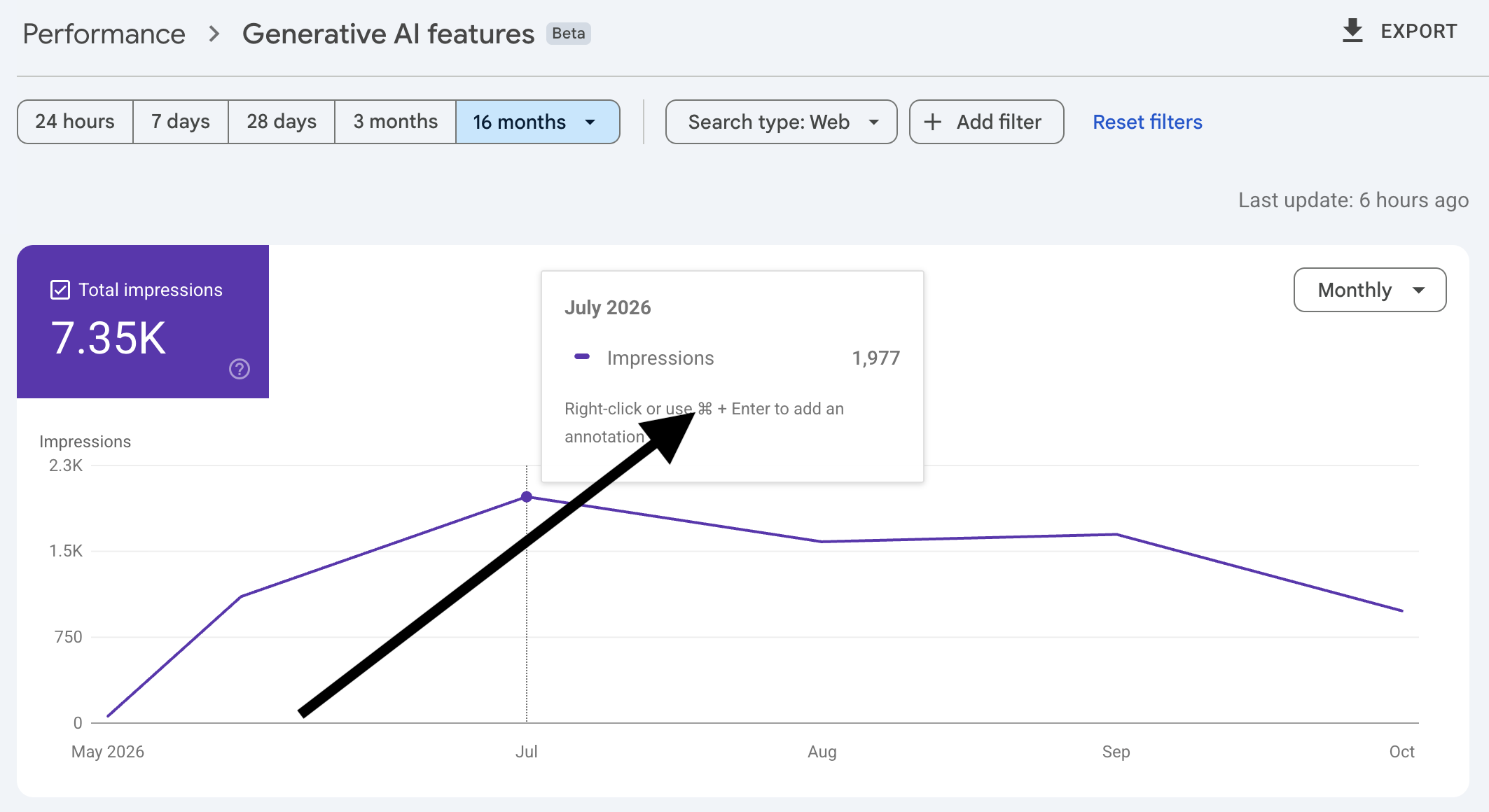
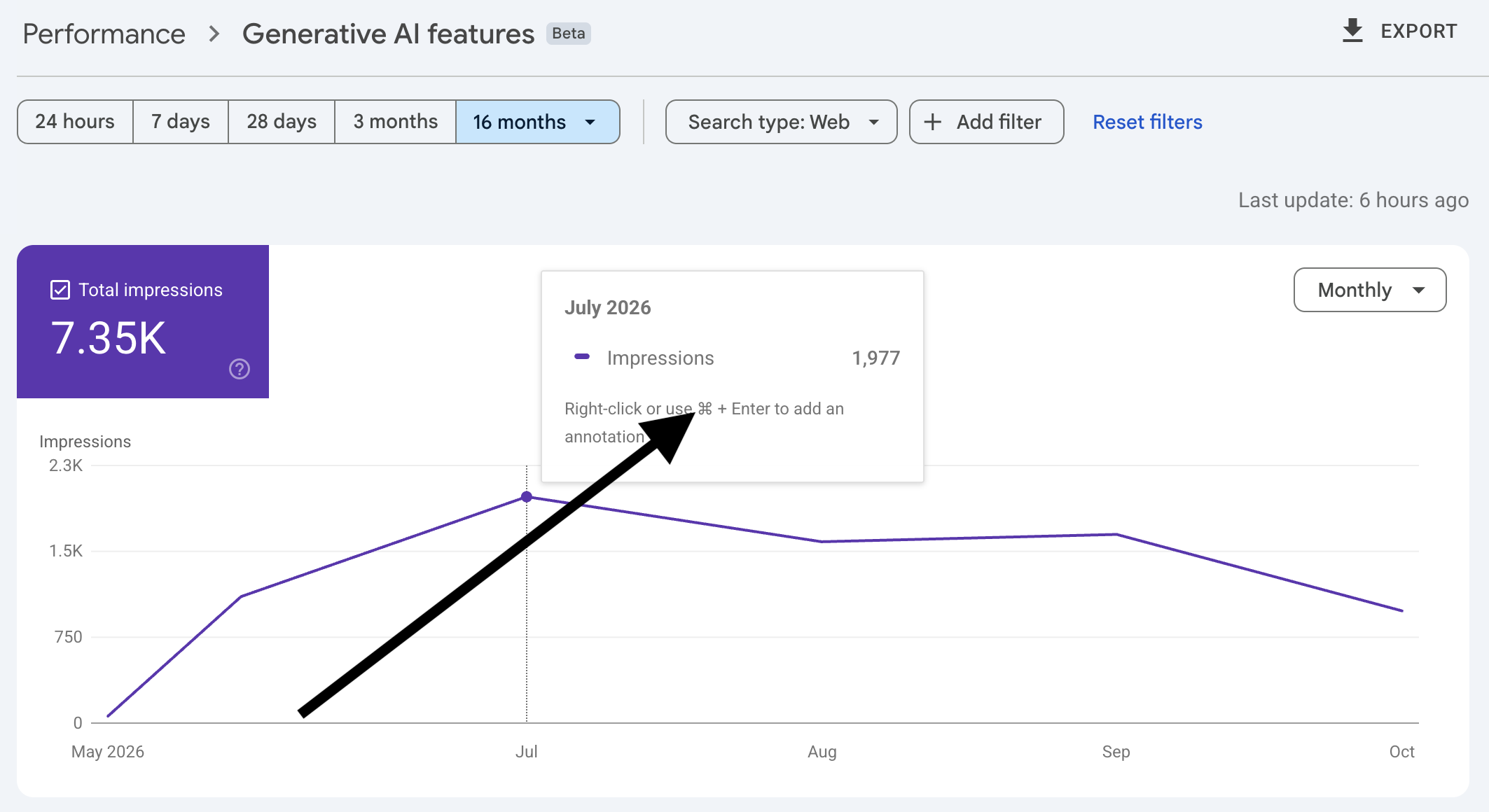
Google’s Generative AI features report shows the site appeared in AI-generated answers 7,350 times since May 2026, peaking at 1,977 in July. Detailed, patient-focused blogs are exactly the kind of content these answers pull from, which is the idea behind generative engine optimization.
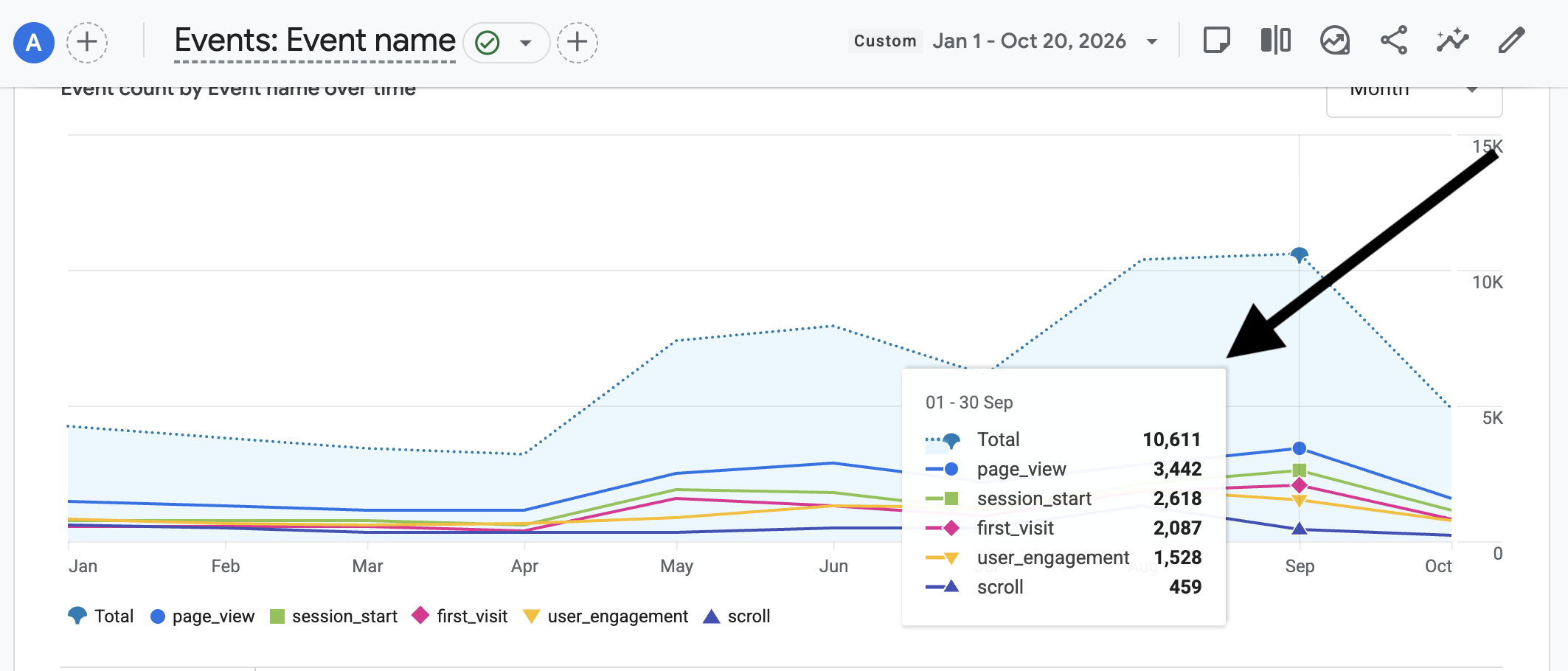
GA4 tells the same story. In January, the site recorded 557 first visits and 1,457 page views. In September, it recorded 2,087 first visits and 3,442 page views. More new people find the clinic every month, and the clinic has started getting leads from search.
It proves a dental clinic does not need a massive budget to grow in search. It needs tracking from day one, organized content, a clear local focus, and topics written around real patient questions. It also shows the work is not finished. The average position is still around 18, so many searches land on page two, and the click-through rate sits at 1.8%. Impressions also eased after July. Pushing those pages onto page one is the next stage. The first numbers in SEO are always the hardest to get. From here, growth gets easier. You can see a similar approach in my cleaning company case study.
Send me your website and I will look at where you stand today: what you rank for, what is missing, and which patient questions your competitors are not answering yet. No pressure and no long sales pitch. Just an honest read on what is possible for your practice.
Expect three to six months before you see steady movement, and closer to a year for strong, consistent results. This clinic started at about 30 clicks a month and reached 104 after roughly ten months. The early months are mostly setup, cleanup and content. Growth speeds up once Google trusts the site.
Ads can bring calls quickly, but healthcare ads are restricted and the cost per patient adds up. They also stop the moment you stop paying. For most clinics, I recommend SEO as the foundation and Google Ads (link to PPC page) as support for specific treatments or busy seasons.
Write about the questions patients ask you in the chair: what a procedure feels like, how long recovery takes, what to do about a child’s tooth problem, or whether a symptom needs attention. I research which of those questions people actually search for, so every post has an audience.
Usually it is a structure problem, not a volume problem. Posts that overlap compete with each other, posts with no clear search intent get ignored, and posts that are not linked to your service pages do not send patients anywhere. Organizing what you already have often brings the quickest gains.
It depends on the size of your site, how much content needs fixing and how competitive your area is. I would rather look at your site first and give you a clear number than quote a package that does not fit. Book a free call and I will walk you through it.
Dental SEO is search optimization built around how patients choose a dentist. It leans heavily on local search, trust and health content that answers real questions accurately. Google holds health topics to a higher standard, so the content has to be clear, correct and backed by real clinical knowledge.
It depends on your area and how far patients are willing to travel. In a dense city, that might be a few neighbourhoods. In a smaller town, it could be the whole region. I look at where your current patients come from and build the target area around that, rather than guessing.
Not necessarily, but your input matters. For this clinic, I provided the topics, the pain points to cover and an outline, and the clinic wrote from their own experience. That mix of research and real clinical knowledge is what makes health content trustworthy, to readers and to Google.
Yes, and it is growing. This clinic’s site has appeared in Google’s AI answers more than 7,000 times since May. AI tools tend to pull from clear, well-structured answers to patient questions, which is what generative engine optimization (link to GEO page) focuses on.
Access to your website, plus Search Console and Google Analytics if you have them. If you do not, I will set them up, just like I did for this clinic. After that, a short call about your services, the patients you want more of and the area you want to serve.
“We truly value Jyoti’s transparency and communication. She shares detailed updates and walks us through the strategy so we always know what’s happening behind the scenes. It’s reassuring to work with someone both knowledgeable and approachable.”
“Working with Jyoti has been an amazing experience. She clearly outlined the entire process, and the thoroughness and support have been incredible. It’s made everything feel structured and seamless.”
“Jyoti has been proactive with updates and detailed reports outlining the work done each month. We appreciate the transparency and the keyword research shared with us. It’s helped us understand the strategy and ongoing SEO efforts.”
“Working with Jyoti on our website was a seamless experience. She took the time to understand our vision and delivered a clean, user-friendly site that reflects our brand perfectly.”