This is one of my longest-running clients: a trailer and RV dealership in British Columbia I have worked with for more than two years. Over that time we migrated the website, rebuilt the structure around new trailers and RVs, and kept every inventory page working for search. Today the dealership gets 50 to 60 leads a month. About 30 of them come from organic search alone, and its blogs now show up in Google’s AI Overviews. Here is how that dealership SEO work was built, and why it keeps paying off.
When I started, this dealership had a website built for a different business. It was mostly set up to sell pre-owned vehicles, but the dealership had moved toward new trailers and RVs.
The old site was full of URLs that no longer matched what the dealership sold: old pre-owned listings, outdated categories and pages with no clear purpose. The menu didn’t help buyers find a trailer or RV by type, size or use. The inventory pages were thin, and nothing tied the blog content to the units on the lot. The site had years of history and real search visibility. It just wasn’t pointing any of that at the new inventory that made the dealership money.
An older dealership website is a big advantage in automotive SEO. It has backlinks, indexed pages, and rankings for searches that newer competitors can’t touch yet. The risk is that one careless redesign throws all of that away. Plenty of dealers, whether they sell cars, trailers or RVs, launch a new website and watch their traffic drop the next month, because inventory pages were deleted or URLs changed with nothing in place. Good dealer SEO is not about starting fresh. It is about keeping everything that already ranks, removing what doesn’t belong, and pointing the site’s authority at the inventory you actually sell.
None of this was a one-time project. It is a monthly routine that has been running for more than two years.
We moved the dealership to a new website with a new design, a new menu and new page types. Before launch, I went through every URL. Pages that still matched the business were kept, irrelevant pre-owned vehicle pages were removed, and inventory was reorganized by trailer and RV type so buyers and Google could both find their way. The site structure now reflects what the dealership sells today, not what it sold years ago.
Each new trailer or RV is optimized based on the actual product: its type, features, size and the words buyers use to search for it. When a unit sells, we never delete the page, because that page may already rank and have links pointing to it. Every month I check in with the client for new arrivals, photos and videos, then update the website, social media and blog around that inventory. This is where SEO for trailers is different from most industries: the inventory changes constantly, but the rankings shouldn’t.
Because the site is old, Search Console shows a huge range of real queries, including many trailer and RV questions no competitor is answering. I review those queries regularly, turn the best ones into blog topics, and link each blog back to the matching inventory pages. Those blogs are what now show up in Google’s AI Overviews.
Alongside the content, I build links from relevant business directories and from niche guest posts on sites where people already talk about trailers, RVs and automotive products. A few strong, relevant links have done far more for this dealership than a pile of random ones. This ongoing work is the core of my SEO service.
These are the reports I check every month for this dealership.
Trailer and RV sales are seasonal. Spring and summer are this dealership’s busiest months, and winter is much quieter. To make the most of the busy months, we also run Meta ads and Google Ads. The budget is small, so we split it between the two platforms based on what’s working. Some months Meta wins, other months Google does, and the budget moves to follow. We A/B test constantly. When an ad group or campaign stops performing, we try new creatives, new videos and new angles. Some of those tests do far better than expected and some flop, and we would never have known which was which without testing. The ads bring in 20 to 30 leads a month. SEO brings in the other 30, all year round, at no cost per click.
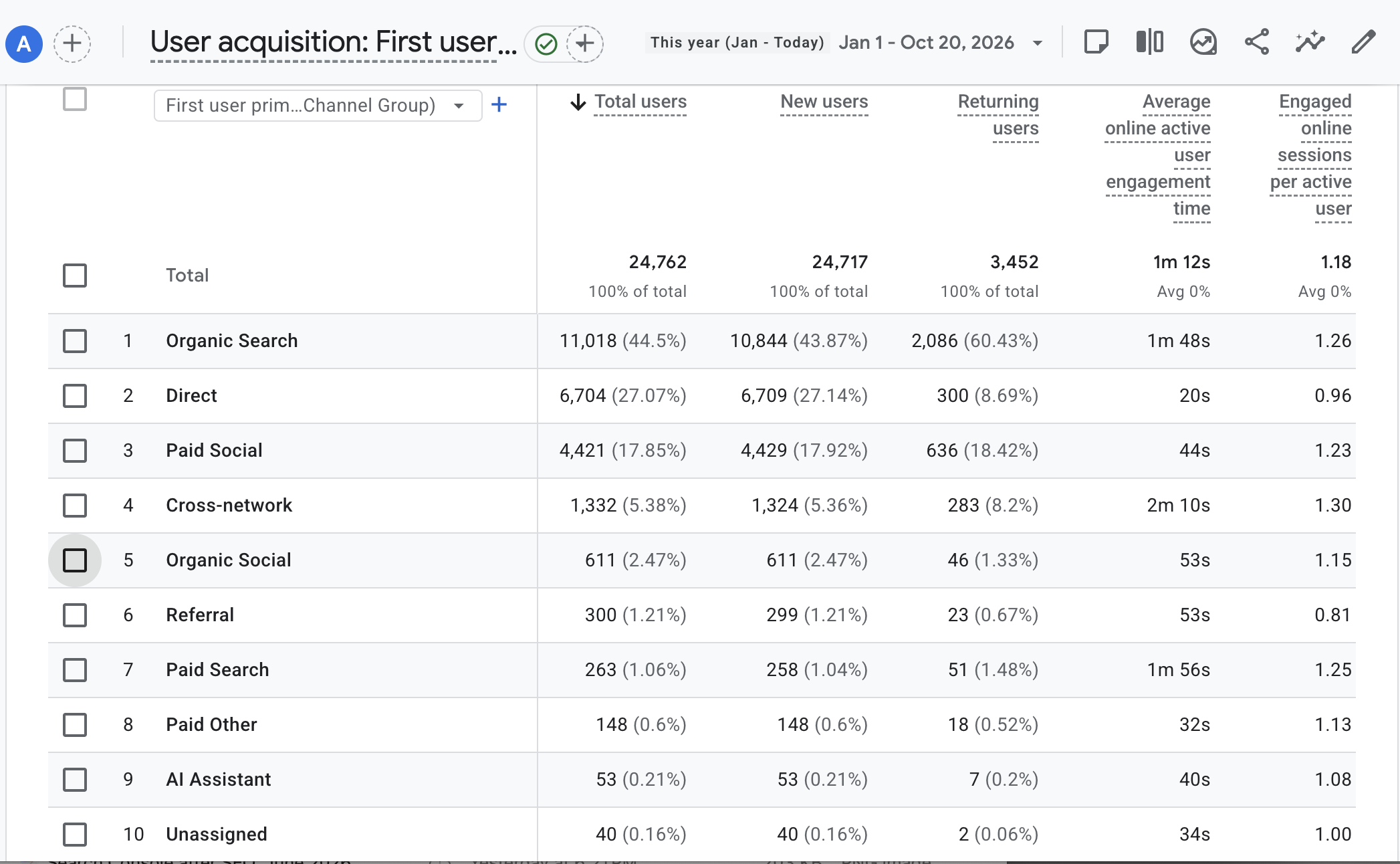
The dealership gets 50 to 60 leads a month. About 30 come from organic search and 20 to 30 from paid campaigns. In GA4, organic search is the biggest source of visitors by a wide margin: 11,018 users so far this year, or 44.5% of all traffic. Organic visitors also stay the longest, averaging 1 minute 48 seconds on the site against 1 minute 12 seconds overall.
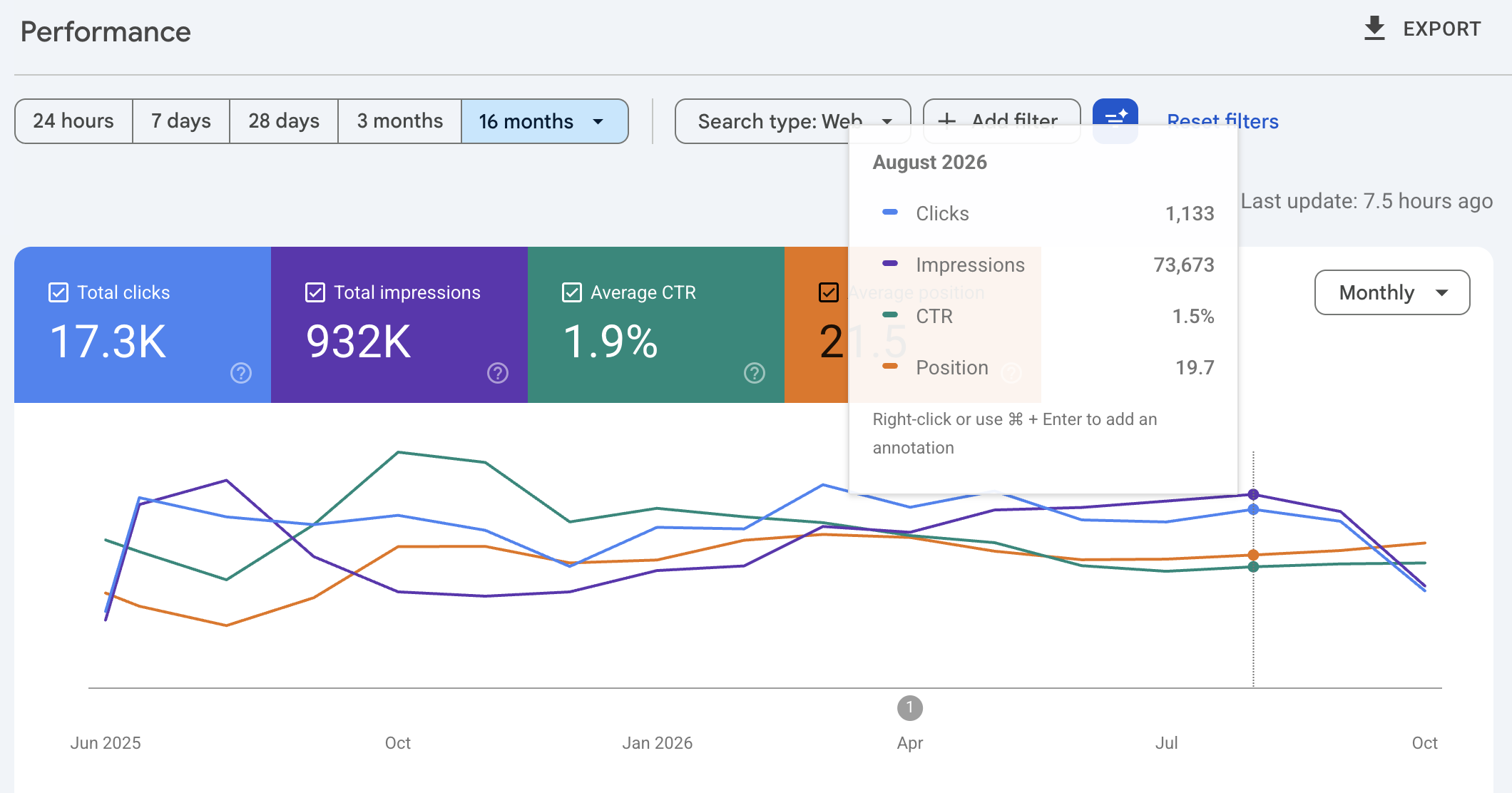
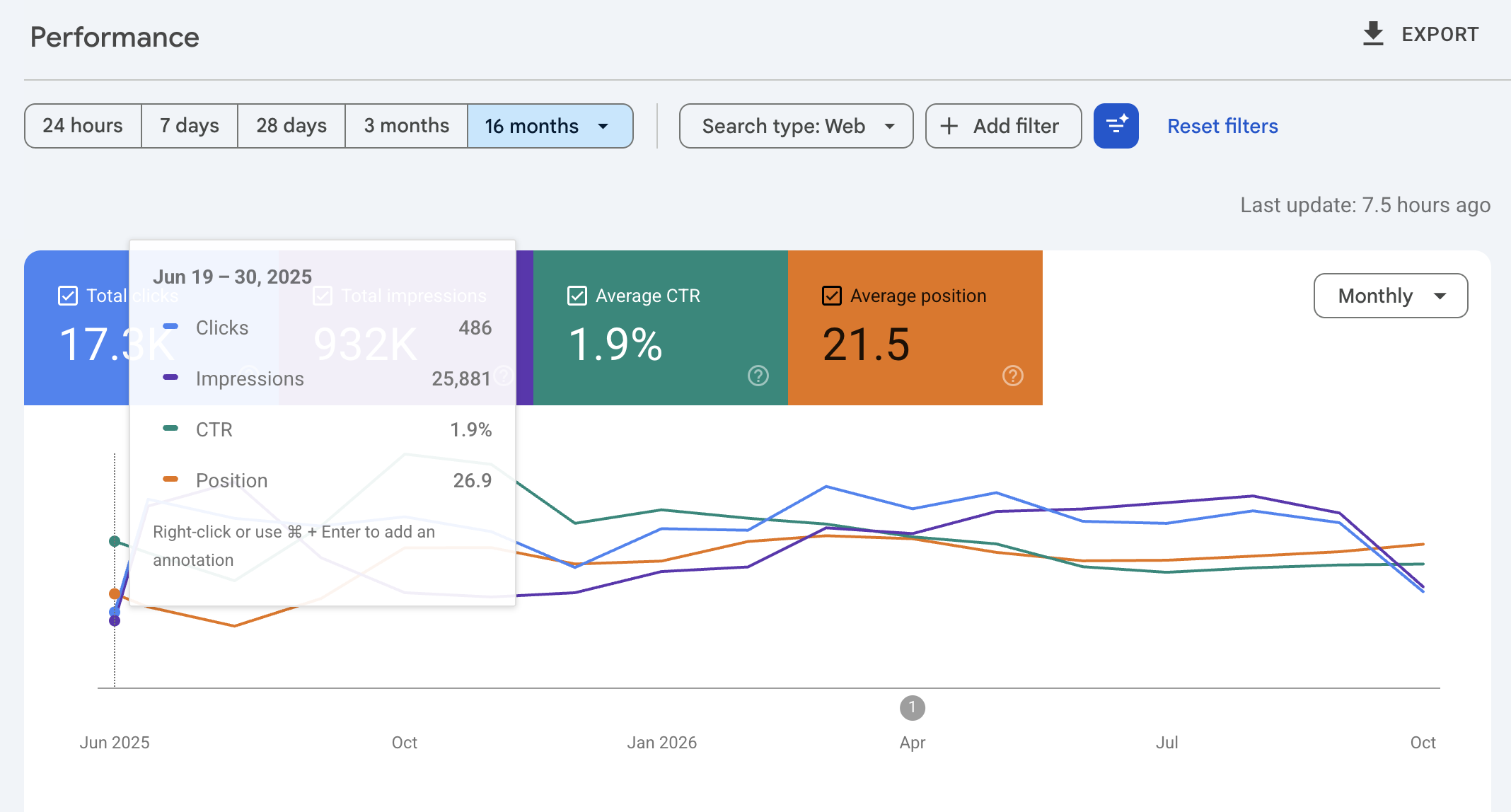
Over the last 16 months, the site has earned 17,300 clicks and 932,000 impressions from Google. In August 2026 alone, it got 1,133 clicks and 73,673 impressions. The average position improved from 26.9 in June 2025 to 19.7 in August 2026. For a seasonal trailer business, holding traffic at that level through winter matters as much as the spring peaks.
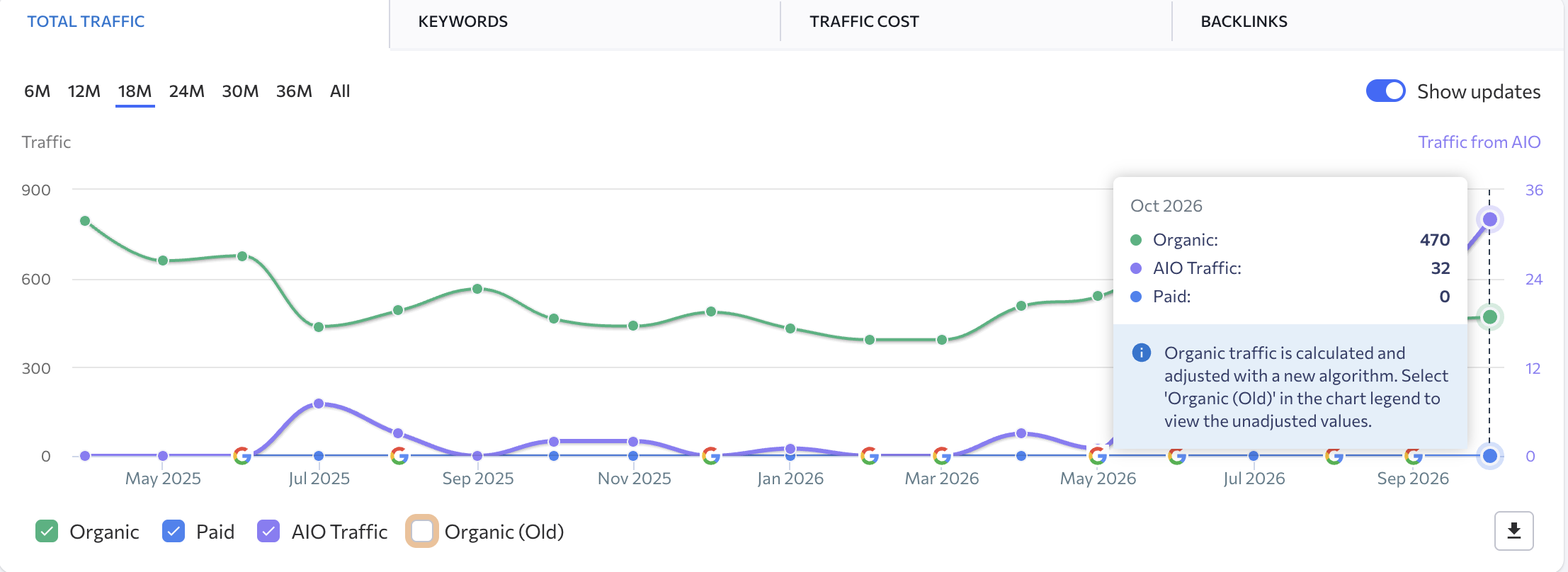
SE Ranking shows the site ranking for about 3,800 keywords in Canada, with a Domain Trust of 34 and 90 referring domains. The dealership is in BC, but the site also ranks for 655 keywords in the US, 171 in the UK and 65 in Australia. Because the rankings are well maintained, trailer and RV buyers from well outside the local market find the dealership too. Close to home, the local SEO work keeps it visible for nearby dealership searches.
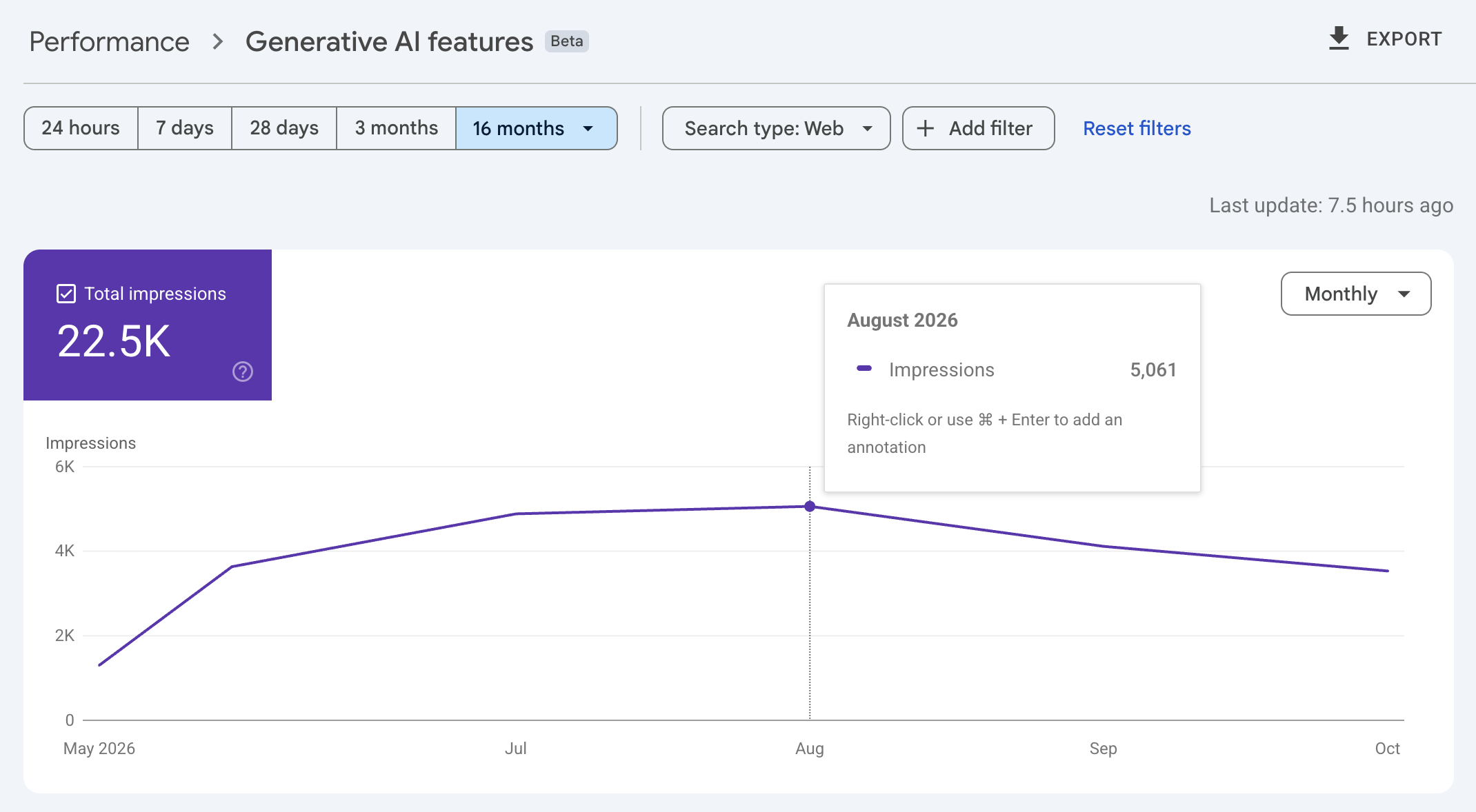
This is the newest and fastest-moving part of the story. Google’s Generative AI features report shows the site appeared in AI-generated answers 22,500 times since May 2026, peaking at 5,061 in August. SE Ranking’s AI Overview traffic for the site is also at its highest point in 18 months. Those appearances come almost entirely from blogs written around real Search Console queries, which is the core idea behind generative engine optimization. GA4 is also starting to record visitors who arrive straight from AI assistants.
It shows that SEO for dealerships is not a one-time fix. This dealership didn’t get to 30 organic leads a month from a single campaign. It got there through a careful migration, inventory pages that never disappear, content built from real buyer questions, and steady monthly upkeep. It also shows the work is never finished. The average position is still around 20, the click-through rate sits below 2%, and winter will always be slower than spring. But the site holds its ground every season, and it is now showing up in the AI answers that are changing how people search for trailers, RVs and cars. If you want to see a similar approach in a very different industry, take a look at my cleaning company case study.
Whether you sell trailers, RVs or cars, and whether you’re in Vancouver, the Fraser Valley, Victoria, Nanaimo, Campbell River, Kelowna, Calgary, Edmonton, Toronto, Ottawa or anywhere else in Canada, send me your dealership website. I’ll look at what you rank for, which inventory pages are working against you, and which buyer questions nobody in your market is answering yet. No pressure and no long sales pitch. Just an honest read on what’s possible for your dealership.
Automotive SEO is search engine optimization for dealerships and other automotive businesses. It helps your website, inventory pages and blogs show up when people search for the cars, trailers or RVs you sell. For a dealership, that means ranking for model and type searches, local searches and buyer questions, then turning those visits into leads.
Six key elements make the biggest difference: a clean site structure built around your inventory, optimized product pages, local SEO, content built from real search queries, relevant backlinks, and monthly tracking. This dealership uses all six. None of them work for long on their own, but together they compound.
No. A sold unit’s page may already rank and have links pointing to it. Deleting it throws that value away. We keep sold pages live, mark them clearly and point visitors to similar units in stock. For this dealership, that is one of the main reasons rankings stayed stable through constant inventory changes.
It can if it’s rushed. Most traffic drops after a redesign happen because ranking pages were deleted or URLs changed with nothing in place. Plan every URL before launch, keep what ranks, remove only what doesn’t belong, and watch Search Console closely for the first few months. Done carefully, a migration can make your dealership website stronger.
Yes. This dealership’s site has appeared in Google’s AI answers more than 22,000 times since May. The blogs that show up answer specific trailer and RV buyer questions clearly, and we found those questions in Search Console. That is what generative engine optimization (link to GEO page) focuses on.
SEO stands for search engine optimization, the same as in any industry. In automotive, the focus is narrower: inventory pages, local visibility around your dealership, and content that answers buying questions. The goal is simple: get your units in front of people who are ready to buy.
The basics are the same, but the searches are different. Car buyers often search by make and model. Trailer and RV buyers search by type, size, towing weight and use, and they ask far more questions before they buy. That’s why content built around those questions works so well for a trailer business.
Local SEO for car dealerships, and for trailer and RV dealers, helps you show up when nearby buyers search for vehicles in your area. It comes down to accurate business listings, location-relevant pages, reviews and local links. Strong local signals also make it easier to rank for broader searches beyond your city.
Both have a place. Ads are useful for pushing inventory during busy seasons, while SEO brings in steady leads all year without paying per click. This dealership gets about 30 leads a month from organic and 20 to 30 from ads. I usually recommend SEO as the foundation and Google Ads (link to PPC page) for seasonal pushes.
Access to your website, Search Console and Google Analytics, plus a quick rundown of your inventory, your busy seasons and the areas you sell into. Once we’re running, the most useful thing you can do is keep sending new inventory photos and videos. That keeps your inventory pages, social media and blogs fresh.
“We truly value Jyoti’s transparency and communication. She shares detailed updates and walks us through the strategy so we always know what’s happening behind the scenes. It’s reassuring to work with someone both knowledgeable and approachable.”
“Working with Jyoti has been an amazing experience. She clearly outlined the entire process, and the thoroughness and support have been incredible. It’s made everything feel structured and seamless.”
“Jyoti has been proactive with updates and detailed reports outlining the work done each month. We appreciate the transparency and the keyword research shared with us. It’s helped us understand the strategy and ongoing SEO efforts.”
“Working with Jyoti on our website was a seamless experience. She took the time to understand our vision and delivered a clean, user-friendly site that reflects our brand perfectly.”