If your website traffic dipped a bit over the last week or so, you might have wondered if you’d done something wrong. You probably didn’t. Here’s what happened.
Quick note before we start. Google launched another spam update on September 24, 2026, and that one is still rolling out. If your traffic moved in the past few days, that’s the one to look at, not the August update this post covers. The advice below applies to both.
What happened, in short
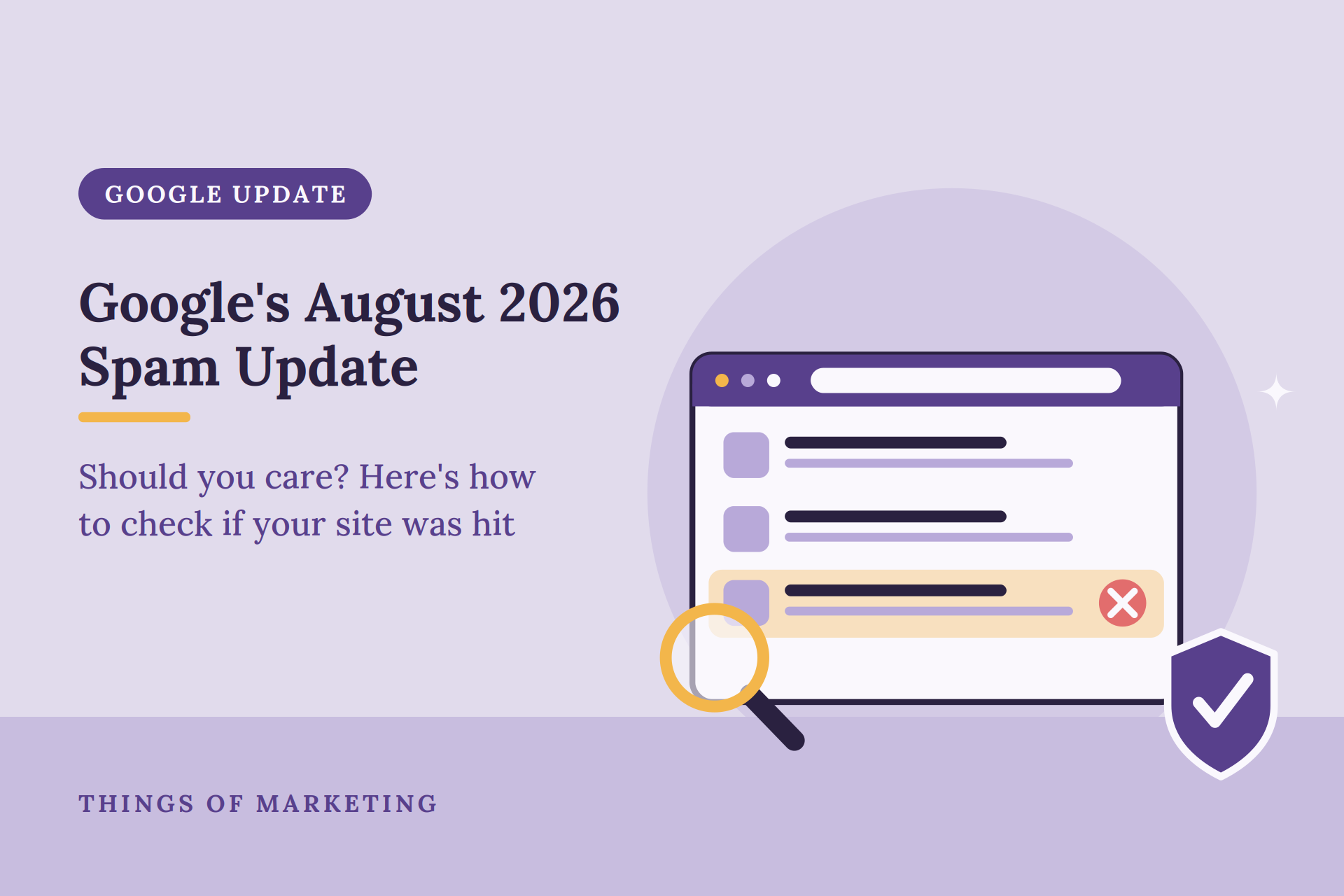
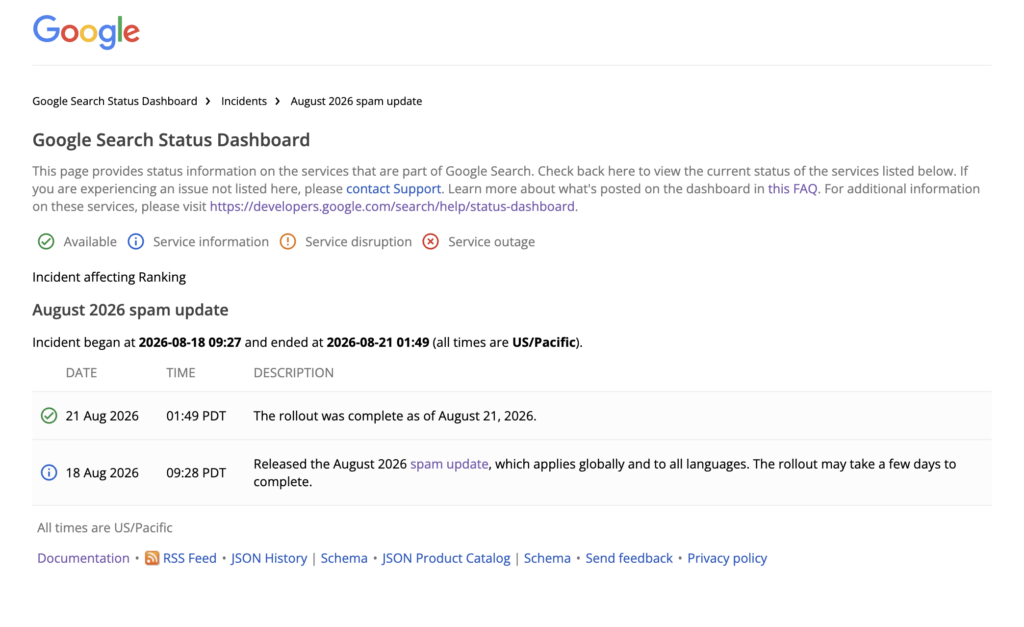
On August 18, 2026, Google pushed out something it calls the August 2026 spam update. It went live worldwide, in every language, and finished on August 21. Google logged it at 2 days and 16 hours.
That was the third of four spam updates this year. There was one in March, another in June, then August, and now September. Google didn’t write a blog post explaining any of them, didn’t say what kind of spam they were targeting, and didn’t give numbers on how many sites or searches were affected. All we have is a short line on the Search Status Dashboard saying it started and later saying it finished.
That’s genuinely it. No big announcement. Most business owners will never know it happened, which is honestly fine.
Wait, what even is a “spam update”?
Not email spam, if that’s what you’re picturing. This is about Google’s systems getting better at spotting websites trying to game search results instead of helping people. Doorway pages built only for search engines, scraped content, keyword stuffing, expired domains bought purely for their backlinks.
One myth worth killing while we’re here. Spam updates are not “the AI content update.” Google has said outright that AI-written content is not against its rules. What breaks the rules is scaled content abuse, meaning pages churned out in bulk mainly to rank rather than to help anyone. A person can do that with a keyboard just as easily as a tool can.
So if you run a normal small business, a bakery, a law office, a clinic, and your site is honestly written for real customers, this probably isn’t about you.
So should you be worried?
Honestly, probably not. But let’s not wave it away either.
You’re likely fine if your site is written for real customers rather than stuffed with keywords, if you haven’t been mass publishing content nobody read before it went live, and if you’ve never paid for sketchy backlinks. A small dip that bounces back in a week or two is nothing to lose sleep over.
Where I’d look closer: if your traffic fell off a cliff around August 18 to 21 and hasn’t come back, or if you know your site has leaned on a lot of thin or bulk published pages in the past. That’s worth a proper look.
Worth saying plainly though. Clean sites do occasionally get caught in these updates. It isn’t common, but “I didn’t do anything wrong” and “nothing happened to me” aren’t quite the same thing.
How to check if this touched your site
You don’t have to guess. It takes five minutes.
Open Google Search Console. If it isn’t connected to your site yet, that’s your first job. Every business website should have it.
Go to the Performance tab and compare the week before the update, roughly August 10 to 17, against the days right after, August 18 to 25. Look at clicks and impressions specifically. Is there a real drop, or just the usual noise every site sees week to week?
If a page or two took a hit rather than the whole site, that’s good news. It’s far more fixable than a site wide slide.
While you’re in there, do the same comparison for September. Take the week of September 16 to 23 against September 24 onward, and export it now before the rollout finishes filling your comparison window with post update numbers.
If you did get hit
A few things worth knowing before you start making changes.
Don’t rush into overhauling your whole site overnight. Google itself has said recovery from something like this can take months, because its systems need time to notice a site has improved. Change fifteen things at once and you’ll never know which one worked.
Take a real, honest look at your content instead. Was any of it rushed out without a person reading it properly? Are there piles of near duplicate pages competing with each other?
And if an old SEO agency or freelancer ever bought you backlinks, that’s the kind of thing that comes back to bite a site during these updates. Google has been clear that once those effects are stripped away, they don’t come back.
Beyond all that, the boring advice is still the best advice. Keep making your site genuinely useful for the people visiting it. If you’d rather have someone work out what’s going on, that’s exactly where our SEO work starts.
One thing worth thinking about beyond this update
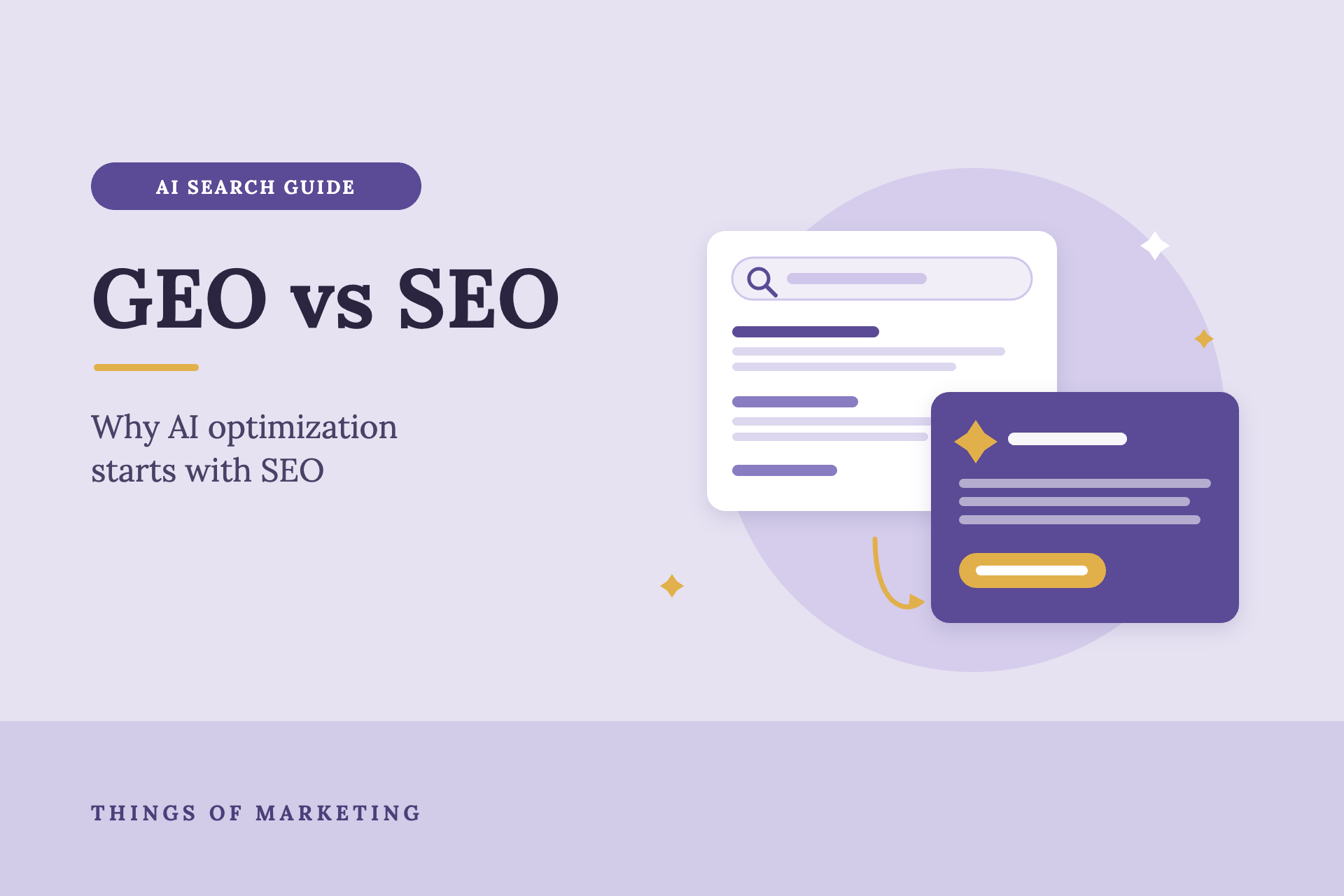
Even if this particular update didn’t touch you, the search results page itself is changing. AI Overviews and Google’s other AI features mean people increasingly get their answer right there on the results page and never click through to any website, yours or anyone else’s.
So ranking well isn’t quite the guarantee it used to be. For a small business, that probably matters more long term than any single update. The stuff that still works is being genuinely worth clicking on. Real reviews, clear information about your business, expertise nobody else offers.
Your next three steps
- Open Search Console and compare the weeks either side of August 18, then do the same for September 24.
- Export that data now, before the current rollout overwrites your clean baseline.
- If nothing moved, close the tab and get back to running your business.
We’re tracking both updates across our own client sites and will publish what we find. If your traffic has moved and you’re not sure why, get in touch and we’ll take a look.