Is Your Blog Actually Getting Seen? The 15-Minute…
Is Your Blog Actually Getting Seen? The 15-Minute Check Every Business Owner Should Run Every time I sit down with…

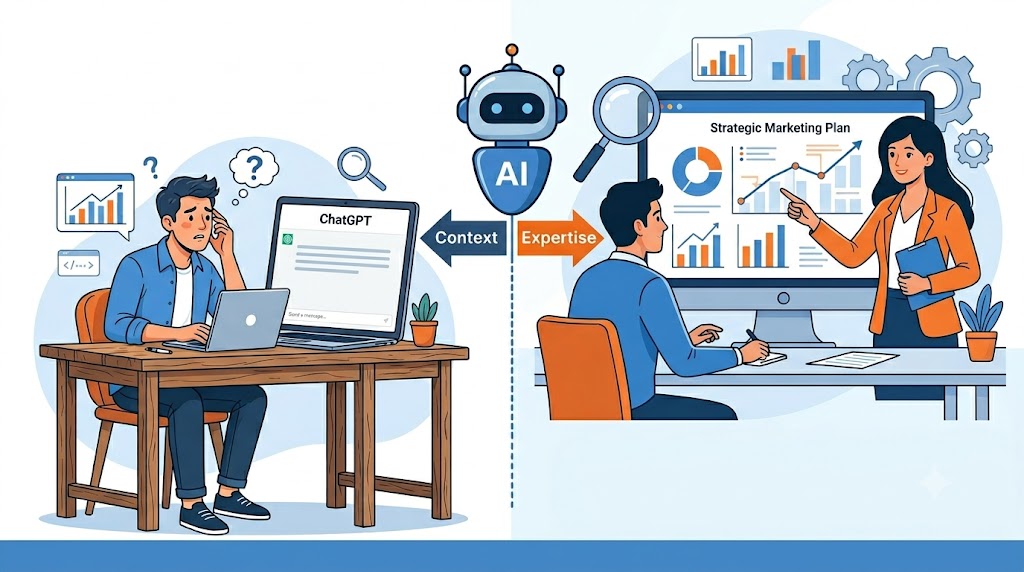
Two people ask ChatGPT the exact same question: “How do I improve my SEO?”
Person A is a business owner who’s never done SEO before. They type the question and hit send.
Person B is a seasoned SEO strategist. Before they type a single word, they’ve fed the AI their current keyword rankings, a competitor gap analysis, their site’s technical audit results, their target audience profile, their content strategy to date, and their business goals for the next 12 months. Then they ask: “Given all of this, where are my biggest opportunities?”
Person A gets a general blog post. Person B gets a performance consultant.
The difference isn’t the AI. The difference is the expertise the operator brought to the conversation — expertise that shaped the input, filtered the output, and knew which parts of the answer were actually applicable to their specific situation.
This is the thing nobody tells small business owners when they’re told that AI is “democratising marketing.” It is, in some ways. But it’s democratising access to information — not access to judgment. And in SEO, PPC, and digital marketing broadly, judgment is most of the job.
We had a client come to us recently with a keyword mapping document they’d built using ChatGPT. They’d done their research. They’d spent real time on it. They’d decided on a pillar page structure, mapped out their supporting content, and were ready to start publishing.
The problem? When we looked at the URL structure AI had suggested, almost every URL contained a variation of the same keyword. The pillar page was /services/seo-for-small-business. The supporting pages were /services/seo-small-business-guide, /services/small-business-seo-tips, /services/small-business-seo-strategy.
To an algorithm, those pages look like duplicates competing against each other. Google sees four pages trying to rank for the same intent and doesn’t know which one to surface — so it often surfaces none of them properly. This is called keyword cannibalisation, and it’s one of the most common SEO issues we clean up. The fix involves restructuring URLs, consolidating content, setting up canonical tags, and in some cases, redirecting pages entirely. That’s not an afternoon’s work.
The client hadn’t done anything wrong by their own logic. They’d asked AI to help with keyword mapping and URL structure. AI had given them what looked like a coherent answer. But AI had no way of knowing that those URL patterns would cannibalise each other — because the client hadn’t told it enough about their site architecture, their existing content, or how search engines evaluate topical clusters. And without that context, AI defaulted to the statistically average response: similar-sounding keywords spread across similar-sounding URLs.
That’s not an AI failure. That’s a context failure. And it’s a category of mistake that costs real money to fix.
There’s a meaningful difference between AI research that doesn’t move the needle and AI research that actively sets you back. Small business owners should know what the second one looks like.
Keyword cannibalisation from incomplete site mapping When you ask AI to suggest keywords without giving it your existing content and URL structure, it has no way to flag overlaps. You end up targeting the same search intent across multiple pages and splitting your ranking potential instead of consolidating it.
Targeting keywords at the wrong stage of the funnel AI will often surface high-volume keywords — because volume looks like success. But a local trades business ranking for a broad informational keyword (“what is HVAC”) gets very different traffic to one ranking for a transactional keyword (“emergency HVAC repair Vancouver Island”). Without understanding your customer’s buying journey, it’s easy to build a content plan that attracts the wrong visitors.
Technical recommendations without site context AI can tell you to fix your page speed, add schema markup, and improve your Core Web Vitals. What it can’t tell you is whether your particular WordPress setup will conflict with the schema plugin it’s suggesting, or whether your hosting environment is the actual bottleneck. Technical SEO advice without site-level context can introduce new problems while solving surface-level ones.
Ad structure decisions without campaign history In PPC, we see business owners restructure their entire campaign based on AI’s “best practice” advice — separating ad groups, changing match types, adjusting bid strategies — without understanding how those changes interact with their specific account’s conversion history. Google’s algorithm uses historical data to optimise. Disrupting campaign structure without understanding that can reset your quality scores and push your CPC up significantly before the account re-stabilises.
This is not an argument against using AI tools in your business. We use them. Most of our clients use them. They save time, surface ideas, and when used well, accelerate work that would otherwise take days.
The argument is this: AI is only as useful as the context and expertise behind the person using it. It doesn’t know your business. It doesn’t know your website’s history. It doesn’t know what your competitors have already done, which tactics are oversaturated in your specific market, or what Google’s most recent core update penalised most in your industry niche.
An experienced SEO strategist or PPC consultant brings all of that to the table — and then uses AI to move faster within a framework built on real knowledge. That’s a very different thing from using AI to build the framework itself.
If you know enough to ask the right questions, AI will give you extraordinary answers. If you’re asking it to tell you what questions to ask, you’ll get something that sounds right but lacks the specificity that separates a strategy that works from one that quietly costs you ground.
If anything in this post sounded familiar — whether it’s a keyword mapping document you built with AI, a PPC campaign that never quite performed the way you expected, or an SEO plan you’re not 100% confident in — we’re happy to take a look.
We offer a free 30-minute consultation with no pitch, no pressure, and no obligation. Just a straight conversation about where your business is, what you’re trying to achieve, and whether your current digital marketing strategy is actually built to get you there.
In 30 minutes, we can typically tell you:
Is Your Blog Actually Getting Seen? The 15-Minute Check Every Business Owner Should Run Every time I sit down with…

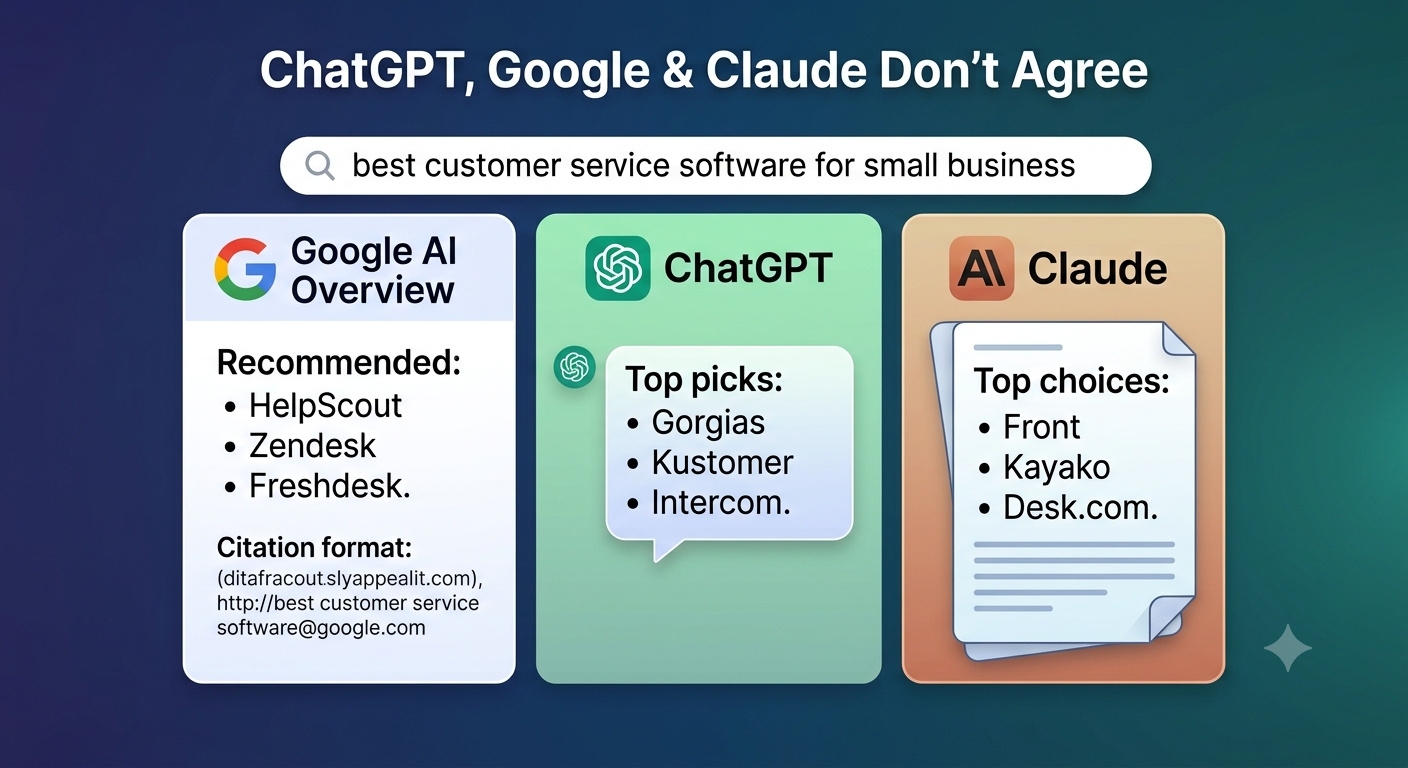
ChatGPT, Google, and Claude Don’t Agree — Here’s What That Means for Your Business ChatGPT, Google, and Claude Don’t Agree…
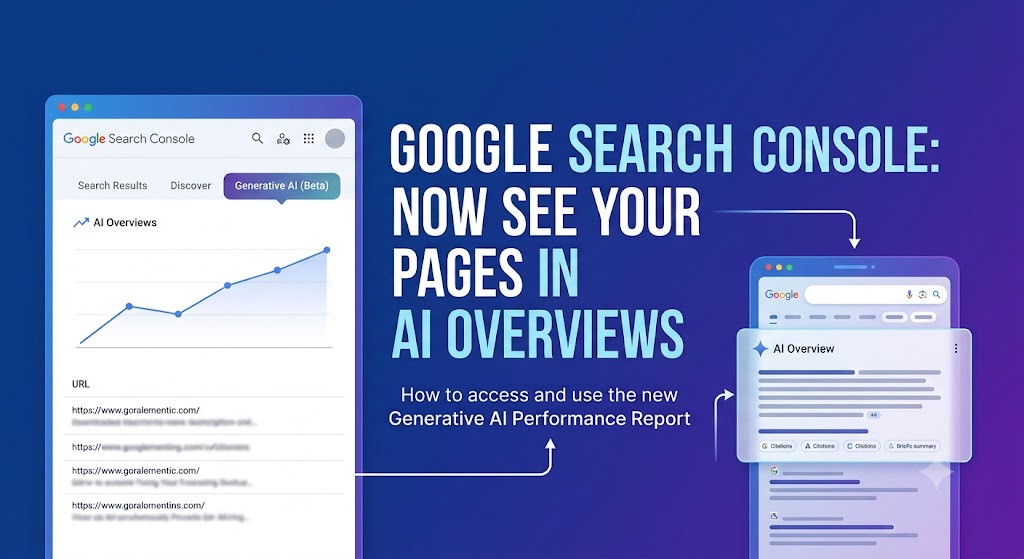
Which of Your Pages Show Up in Google’s AI Overviews? Google Will Now Tell You. A new Search Console report…
“We truly value Jyoti’s transparency and communication. She shares detailed updates and walks us through the strategy so we always know what’s happening behind the scenes. It’s reassuring to work with someone both knowledgeable and approachable.”
“Working with Jyoti has been an amazing experience. She clearly outlined the entire process, and the thoroughness and support have been incredible. It’s made everything feel structured and seamless.”
“Jyoti has been proactive with updates and detailed reports outlining the work done each month. We appreciate the transparency and the keyword research shared with us — it’s helped us understand the strategy and ongoing SEO efforts.”
“Working with Jyoti on our website was a seamless experience. She took the time to understand our vision and delivered a clean, user-friendly site that reflects our brand perfectly.”